Wash and Decontamination
How to Clean Windshield Wipers, and Stop the Streaking
Most people clean the blade, watch the smear come back within a week, and buy new wipers. The film is almost always on the glass, and until it comes off, no blade of any price will clear it.
By Sawyer V. · Last verified 2026-11-09
We have not tested any of this. Everything below is compiled from published manufacturer specifications, and the arithmetic is printed so you can check it. This page carries affiliate links: if you buy through one we earn a commission at no extra cost to you, and it does not change the order of the picks. Full disclosure.
Top pick
| # | Pick | Best for | Score | Price |
|---|---|---|---|---|
| 1 | Griot's Garage Fine Glass Polish Griot's Garage | Mild water spots, and the wipers that ride over them | 6.8/10 | $22.99 - view on Amazon |
| 2 | 3D Glass Polish 3D Car Care | Wiper marks and light scratches | 5.8/10 | $31.99 - view on Amazon |
| 3 | CarPro Eraser CarPro | Checking your work between polishing steps | 6.4/10 | $24.99 - view on Amazon |
| 4 | Adam's Glass Cleaner Adam's Polishes | Tint and navigation screens, stated explicitly | 6.2/10 | $25.49 - view on Amazon |
| 5 | Autofiber Korean Twist Detailing & Glass Towels Autofiber | The highest published GSM for glass here | 6.3/10 | $19.00 - view on Amazon |
| 6 | Adam's Graphene Ceramic Glass Coating Adam's Polishes | The cheapest way into a covalently bonded glass coating | 5.8/10 | $44.19 - view on Amazon |
Prices last verified November 9, 2026. They move constantly; the figure on Amazon when you click is the real one.
Diagnose it in ten seconds
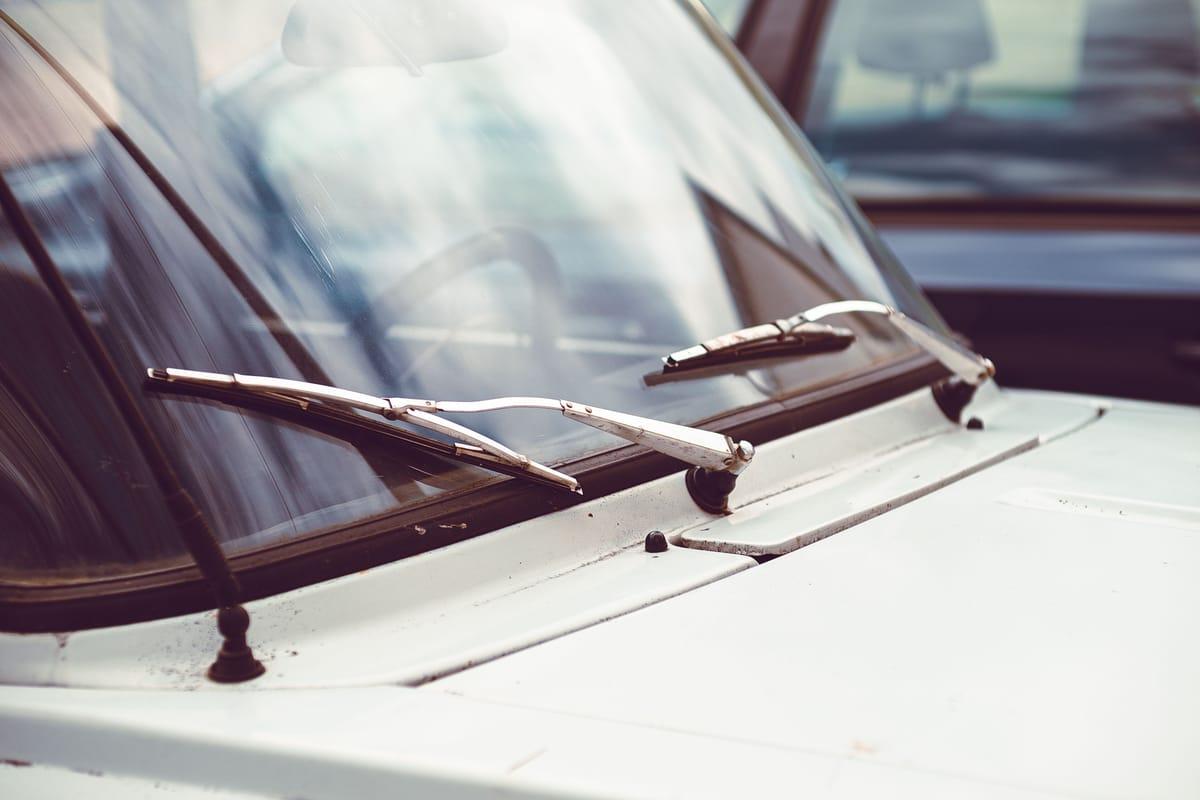
Three different faults produce three different smears, and they have three different fixes. Run the washers, watch the first wipe, and the windshield tells you which one you have.
A haze across the whole swept area
This is film on the glass, and it is by far the most common. It shows worst at night against oncoming headlights and after the first rain following a dry spell. Nothing about the blade is wrong. Cleaning the blade will change nothing, and nor will a new blade — this is the failure people spend money on twice.
One repeating line in the same place
A single line that reappears in the same spot every wipe is debris lodged on the blade edge or a nick in the rubber. Wiping the blade fixes the first and nothing fixes the second.
Juddering, chattering or skipping
A blade that stutters across the glass instead of gliding is usually riding on a rain repellent that has started to break down, leaving the surface patchy — grippy in some places and slick in others. It can also be a blade that has taken a set from sitting in one position, or an arm with weak spring tension. Stripping and re-coating the glass is the cheap thing to try first, because it is also the most likely cause.
Why the glass is almost always the culprit
Automotive glass is not as smooth as it looks. Road film — a mix of exhaust soot, tire rubber, brake dust and oily traffic residue — bonds to it over months and builds a layer the blade has to push through. Three other things pile on top of that: silicone and gloss agents from wash-and-wax products that overspray onto the glass, minerals left behind when hard water dries on it, and the remains of whatever rain repellent was applied last.
You can feel the result. Dry the glass, put a hand in a thin plastic bag and run it over the swept area: a windshield with film on it feels gritty where the rest of the glass feels like glass. That is the same test the clay bar guide uses on paint, and it works on glass for the same reason.
None of that comes off with glass cleaner, because a cleaner is formulated to lift what is sitting on the surface, not what has bonded to it. That takes an abrasive, which is what a glass polish is.
| What you see | What it is | The fix |
|---|---|---|
| Haze across the whole swept area | Bonded road film, silicone or water minerals | Glass polish, then re-protect |
| One line in the same place each wipe | Debris on the blade edge, or a nick in the rubber | Wipe the blade; replace it if the line stays |
| Juddering or chattering | Patchy rain repellent, or a blade that has taken a set | Strip and re-coat the glass first |
| Smearing only in one corner | An arm that is not loading the blade evenly | A parts problem, not a cleaning one |
| Streaks that appear only after washing | Wash-and-wax or drying-aid overspray on the glass | Alcohol-based prep on the glass |
The fix, in order
The order matters more than the products. Polishing after you coat strips the coating you just paid for, and cleaning the blade before you clean the glass means the blade picks the film straight back up on the first wipe.
- 1Wash the car, or at least the glass, so you are not grinding loose grit into the windshield with a polishing pad.
- 2Polish the swept area of the glass by hand or with a machine, in overlapping passes, and buff off with a clean glass towel.
- 3Wipe the glass down with an alcohol-based prep to remove polishing oils, then check your work in low light.
- 4Lift each arm and draw a prep-dampened microfiber along the blade until the cloth stops coming away gray.
- 5Coat the glass, and let it cure exactly as long as the maker says before the car sees rain.
What to use at each step
Griot’s Fine Glass Polish is the one to start with, and it earns that on a published claim nothing else in this ledger makes: Griot’s state it helps extend the life of your wipers, alongside mild water spots, road film and stains as its targets, on windshields, sunroofs and side glass. What they do not publish is the application method — hand or machine is never stated — or anything about the abrasive, which are the two things you would most want to know.
3D Glass Polish is the alternative when the glass is past film and into marks, and it is the only glass polish on this site that names wiper marks among its defects along with swirls, scratches and water spots. 3D name the abrasive, which is rare here: cerium oxide, the compound glass shops have used for decades. It is the dearest bottle in the group and 3D publish no application method either. The glass polish roundup ranks the full field, including the two that are sold for coating prep rather than for defects.
CarPro Eraser is the alcohol-based prep, and it does two jobs on this page: it removes the polishing oils left behind in step two, and it is what you wipe the blade with. CarPro sell it for use after compounding and before a sealant, wax or coating, and name paint and glass as its surfaces. No formula details and no flash time are published, which is the gap. A liter is the sensible size given how much of it a glass job uses.
Adam’s Glass Cleaner is the maintenance product — the thing you use every week once the film is gone. Adam’s state it is safe for tinted windows and safe on navigation screens, which is the specification that matters on any car built in the last decade. They do not say ammonia-free in those words and publish no ingredient list, so if your car has aftermarket tint, the tint-safe glass cleaner page is worth reading first. The glass cleaner roundup has the rest.
Autofiber’s Korean Twist towels are the buffing cloth, at a published 600gsm in 16 by 16 inches, three to a pack, in a 70/30 blend, with glass, tint and PPF named as uses. Glass is the one surface where a dedicated towel genuinely matters: a plush paint towel leaves lint on glass, and a waffle-weave drags. The glass towel roundup compares published GSM across eight of them.
Adam’s Graphene Ceramic Glass Coating is the re-protection step, and it publishes its durability in two units: 9 to 12 months, or approximately 10,000 miles. The mileage figure is the more useful of the pair here, because what wears a glass coating out is the blade sweeping across it rather than the calendar — a car that covers 20,000 miles a year will go through it twice as fast as the months suggest. Adam’s also state that it bonds covalently to the glass, that it is safe for tints and films of all sorts, and that no cure time is required, which makes it the low-fuss choice if the car has to go back outside the same evening. It is sold in 30ml only, and at that size it is comfortably the dearest thing on this page per ounce. The glass coating roundup ranks the alternatives, including the two that publish longer claims in months.
Four things not to do
- Do not use household glass cleaner. Most are ammonia-based, and ammonia attacks aftermarket tint film and the coatings on interior screens. It also strips a glass coating faster than anything else you could reach for.
- Do not clean a blade with anything solvent-heavy beyond an alcohol prep. Petroleum solvents swell and soften the rubber, which turns a blade that was merely dirty into one that is genuinely finished.
- Do not apply rain repellent over film. It will bond to the film rather than the glass, come off in patches within weeks, and the patchy result is exactly what makes wipers judder.
- Do not polish glass with a paint compound. Paint abrasives are formulated to break down on clear coat and simply will not cut glass, which is why glass polishes use cerium oxide instead.
Keeping it clear
Once the film is off, the job becomes maintenance, and maintenance is cheap. Clean the glass with an automotive, tint-safe cleaner and a dedicated glass towel every time you wash. Keep wash-and-wax products and drying aids off the windshield, because the gloss agents that make paint look wet are exactly what makes glass smear. Top the coating up on the maker’s schedule rather than waiting for the juddering to come back.
Winter is the season that undoes all of it fastest: road salt, grit and de-icing chemicals build film quickly, and scraping drags whatever is on the glass across it. The de-icing guide covers the order to work in, and the winter washer fluid page covers the half of the problem that happens at speed.
What to buy
- You have a haze across the whole sweep and have never polished the glass: Griot's Fine Glass Polish, the one with a published wiper claim, plus a glass towel.
- The glass has visible wiper marks rather than film: 3D Glass Polish, cerium-oxide based and the only one here that names wiper marks.
- Your wipers started smearing right after a wash-and-wax: CarPro Eraser on the glass. The problem is overspray, not the blade.
- The wipers judder rather than smear: strip and re-coat the glass before you buy a blade. Adam's graphene glass coating publishes 9 to 12 months, or about 10,000 miles.
- You just want the weekly product so it does not come back: Adam's Glass Cleaner, tint-safe and screen-safe, with a 600gsm glass towel.
- A single line keeps appearing in the same place after all of the above: that is a nicked blade, and no product on this page will fix it.
Every pick, with the working
Each entry lists the specifications the maker publishes, the axis scores those specifications produce, and what you give up. Rows that read “Not published” are not omissions on our side: they are figures the maker will not commit to in writing, and they cost the product points on the transparency axis.
Our pickMild water spots, and the wipers that ride over them
Griot's Garage Fine Glass Polish
Griot's Garage
$22.99 for 16 oz, and Griot's are refreshingly modest about what it is for: the mild spots you normally see on a windshield, sunroof and side glass. They are the only maker on this page who claims the polish does something for the wipers as well, and the only one who describes the defect as mild rather than stubborn.
- Size
- 16 oz, item 11017
- Stated defects
- Mild water spots, road film and stains
- Stated glass
- Windshield, sunroof, side glass
- Wiper claim
- Helps extend the life of your wipers
- Application
- Not published
- Abrasive
- Not published
What it does well
- The only listing here that claims it helps extend the life of your wipers
- Windshield, sunroof and side glass are each named
- Road film and stains named as well as water spots
Who it is not for
- No application method published: hand or machine is not stated
- No abrasive named, and mild spots is the ceiling Griot's claim
- Nothing published about trim, tint or working in direct sun
How this score was calculated
- Protection claimdropped
- Nothing in this category is bought on how long it lasts, so the axis is dropped and the other weights are re-normalized.
- Capabilitydropped
- No single published number decides capability in this category, so the axis is dropped rather than invented.
- Cost per ounce10.0/10, weight 16%
- $22.99 for 16 oz works out at $1.44 an ounce, scored against a band of $1.50 (good) to $7.00 (expensive) for a glass polish.
- Price against the ceiling3.4/10, weight 14%
- A listed $22.99 against the $35 one upgrade in this category realistically tops out at. A list price captured on the compile date, not a live price and not what you will pay.
- Written commitmentdropped
- Griot's Garage publishes no warranty term on this product's own page, so the axis is dropped. On a tool that is worth noticing, and it costs the product points on transparency instead.
- Spec transparency6.7/10, weight 18%
- 4 of the 6 specifications we went looking for are published by Griot's Garage. Every blank row below is something the maker will not put in writing, and it costs the product points here.
List price $22.99 per Griot's Garage, 16 oz, captured on the compile date below. Not a live price and not what you will pay — the button is where the real number is.
Specifications from Griot's Garage Fine Glass Polish, item 11017, compiled September 8, 2026.
2Wiper marks and light scratches
3D Glass Polish
3D Car Care
Skip this one. It is the dearest bottle on this page and it is the second thing to try, not the first. For ordinary road film the Griot's polish does the same job for less, and 3D publish no application method — so if you are working by hand you are guessing at the technique either way.
$29.99 for 16oz of a cerium oxide polish that 3D state removes swirls, scratches, wiper marks and water spots from automotive glass. It is the only listing here that names its abrasive.
- Size
- 16 oz
- Abrasive
- Cerium oxide
- Stated defects
- Swirls, scratches, wiper marks, water spots
- Application
- Not published
- pH
- Not published
What it does well
- Cerium oxide named as the base
- Swirls, scratches, wiper marks and water spots all stated
- 16oz at $29.99 is about $1.87 an ounce
Who it is not for
- $29.99 is the highest bottle price here
- No hand-or-machine guidance on the listing
- No directions beyond minimal elbow grease
How this score was calculated
- Protection claimdropped
- Nothing in this category is bought on how long it lasts, so the axis is dropped and the other weights are re-normalized.
- Capabilitydropped
- No single published number decides capability in this category, so the axis is dropped rather than invented.
- Cost per ounce9.3/10, weight 16%
- $29.99 for 16 oz works out at $1.87 an ounce, scored against a band of $1.50 (good) to $7.00 (expensive) for a glass polish.
- Price against the ceiling1.4/10, weight 14%
- A listed $29.99 against the $35 one upgrade in this category realistically tops out at. A list price captured on the compile date, not a live price and not what you will pay.
- Written commitmentdropped
- 3D Car Care publishes no warranty term on this product's own page, so the axis is dropped. On a tool that is worth noticing, and it costs the product points on transparency instead.
- Spec transparency6.0/10, weight 18%
- 3 of the 5 specifications we went looking for are published by 3D Car Care. Every blank row below is something the maker will not put in writing, and it costs the product points here.
List price $29.99 per 3D Car Care's own store, 16oz, captured on the compile date below. Not a live price and not what you will pay — the button is where the real number is.
Specifications from 3D Car Care's Glass Polish page, compiled September 8, 2026.
3Checking your work between polishing steps
CarPro Eraser
CarPro
$22.99 a liter for an oil and polish remover that Obsessed Garage use after compounding, to see the true result before finishing, and again before sealant, wax or coating. They find it less grabby than plain isopropyl alcohol, and it works on glass too.
- Sizes
- 1 L ($22.99), gallon ($89.99)
- Stated use
- After compounding, and before sealant, wax or coating
- Surfaces
- Paint and glass
- Formula
- Not published
- Flash time
- Not published
What it does well
- $22.99 a liter, about $0.68 an ounce
- Between polishing steps as well as before protection
- Glass as well as paint
Who it is not for
- The retailer's notes are the listing; no formula details
- No flash time published
- The gallon costs more per ounce than the liter
How this score was calculated
- Protection claimdropped
- Nothing in this category is bought on how long it lasts, so the axis is dropped and the other weights are re-normalized.
- Capabilitydropped
- No single published number decides capability in this category, so the axis is dropped rather than invented.
- Cost per ounce9.6/10, weight 16%
- $22.99 for 33.8 oz works out at $0.68 an ounce, scored against a band of $0.60 (good) to $2.50 (expensive) for a panel prep spray.
- Price against the ceiling3.4/10, weight 14%
- A listed $22.99 against the $35 one upgrade in this category realistically tops out at. A list price captured on the compile date, not a live price and not what you will pay.
- Written commitmentdropped
- CarPro publishes no warranty term on this product's own page, so the axis is dropped. On a tool that is worth noticing, and it costs the product points on transparency instead.
- Spec transparency6.0/10, weight 18%
- 3 of the 5 specifications we went looking for are published by CarPro. Every blank row below is something the maker will not put in writing, and it costs the product points here.
List price $22.99 per Obsessed Garage, 1 liter, captured on the compile date below. Not a live price and not what you will pay — the button is where the real number is.
Specifications from Obsessed Garage's CarPro Eraser listing, compiled September 8, 2026.
4Tint and navigation screens, stated explicitly
Adam's Glass Cleaner
Adam's Polishes
$12.99 for 16oz up to a five-gallon drum, stated safe on tint and on navigation screens. Tint safety means ammonia-free, and ammonia is what turns aftermarket tint purple over a couple of summers.
- Sizes
- 16oz / 2-pack / gallon / 5 gallon
- Tint safety
- Stated safe for tinted windows
- Screen safety
- Stated safe on navigation screens
- Ammonia
- Not published
- Dilution
- Not published
- pH
- Not published
What it does well
- Tint-safe stated directly, which is the specification that matters on any modern car
- Also stated safe on navigation screens, which most glass cleaners are not
- Four sizes up to five gallons
Who it is not for
- No ammonia-free statement in those words, and no ingredient list
- No dilution published
- $0.81 an ounce at 16oz is dear for glass cleaner
How this score was calculated
- Protection claimdropped
- Nothing in this category is bought on how long it lasts, so the axis is dropped and the other weights are re-normalized.
- Capabilitydropped
- No single published number decides capability in this category, so the axis is dropped rather than invented.
- Cost per ounce7.9/10, weight 16%
- $12.99 for 16 oz works out at $0.81 an ounce, scored against a band of $0.50 (good) to $2.00 (expensive) for a glass cleaner.
- Price against the ceiling5.7/10, weight 14%
- A listed $12.99 against the $30 one upgrade in this category realistically tops out at. A list price captured on the compile date, not a live price and not what you will pay.
- Written commitmentdropped
- Adam's Polishes publishes no warranty term on this product's own page, so the axis is dropped. On a tool that is worth noticing, and it costs the product points on transparency instead.
- Spec transparency5.0/10, weight 18%
- 3 of the 6 specifications we went looking for are published by Adam's Polishes. Every blank row below is something the maker will not put in writing, and it costs the product points here.
List price $12.99 per Adam's Polishes' own store, 16oz, captured on the compile date below. Not a live price and not what you will pay — the button is where the real number is.
Specifications from Adam's Glass Cleaner page, compiled September 8, 2026.
5The highest published GSM for glass here
Autofiber Korean Twist Detailing & Glass Towels
Autofiber
$19.00 for three 16 by 16 inch towels at a published 600gsm, in a 70/30 polyester and polyamide blend of split Korean microfiber. Autofiber put the weight in the product title and the blend in the listing, which is more than anybody else on this page publishes, and a twist pile is the weave that lifts film off glass rather than pushing it around.
- GSM
- 600
- Dimensions
- 16 in x 16 in
- Pack
- 3
- Stated uses
- Glass, tint and PPF; detailing
- Blend
- 70% polyester, 30% polyamide, 100% split Korean microfiber
- Edge
- Not published
What it does well
- 600gsm published in the product title itself
- 70/30 polyester and polyamide blend published, which almost no glass towel states
- Named for glass, tint and PPF, and sold as a three-pack so one is always clean
Who it is not for
- $6.33 a towel is dear for glass
- No edge construction published
- A twist pile holds more cleaner than a smooth face, so it wants wringing out on a tall windshield
How this score was calculated
- Protection claimdropped
- Nothing in this category is bought on how long it lasts, so the axis is dropped and the other weights are re-normalized.
- Capabilitydropped
- Autofiber does not publish a figure for published gsm on this product, so the axis is dropped and the remaining weights are re-normalized.
- Cost per ouncedropped
- This is not a consumable, so cost per ounce says nothing useful and the axis is dropped.
- Price against the ceiling3.7/10, weight 14%
- A listed $19.00 against the $30 one upgrade in this category realistically tops out at. A list price captured on the compile date, not a live price and not what you will pay.
- Written commitmentdropped
- Autofiber publishes no warranty term on this product's own page, so the axis is dropped. On a tool that is worth noticing, and it costs the product points on transparency instead.
- Spec transparency8.3/10, weight 18%
- 5 of the 6 specifications we went looking for are published by Autofiber. Every blank row below is something the maker will not put in writing, and it costs the product points here.
List price $19.00 per Autofiber's own store, 3-pack, captured on the compile date below. Not a live price and not what you will pay — the button is where the real number is.
Specifications from Autofiber's Korean Twist product page, compiled September 8, 2026.
6The cheapest way into a covalently bonded glass coating
Adam's Graphene Ceramic Glass Coating
Adam's Polishes
30ml at $44.99 with a published 9 to 12 months or approximately 10,000 miles. Adam's are unusually specific about the mechanism, stating it bonds covalently to the glass rather than sitting on it the way a conventional glass sealant does.
- Size
- 30ml only
- Claimed durability
- 9-12 months, or approximately 10,000 miles
- Bonding
- Stated to bond covalently to the glass surface
- Tint safety
- Stated safe for tints and films of all sorts
- Cure time
- None required, per the maker
- Published coverage
- Not published
- Warranty
- Not published
What it does well
- Durability published in months and miles both
- Bonding mechanism named: covalent, rather than a surface film
- Stated safe on tints and films of all types
- No cure time required, which is stated on the listing
Who it is not for
- $44.99 for 30ml is $44 an ounce
- Only sold in the 30ml size
- No consumption figure, so the number of applications per bottle is unknown
How this score was calculated
- Protection claim3.8/10, weight 20%
- Adam's Polishes claims 9 months, scored against the 24-month ceiling this category tops out at. That is the manufacturer's claim reported here, not a durability figure anyone measured for us.
- Capabilitydropped
- No single published number decides capability in this category, so the axis is dropped rather than invented.
- Cost per ounce7.5/10, weight 16%
- $44.99 for 1.01 oz works out at $44.54 an ounce, scored against a band of $20.00 (good) to $120.00 (expensive) for a glass coating.
- Price against the ceiling5.0/10, weight 14%
- A listed $44.99 against the $90 one upgrade in this category realistically tops out at. A list price captured on the compile date, not a live price and not what you will pay.
- Written commitmentdropped
- Adam's Polishes publishes no warranty term on this product's own page, so the axis is dropped. On a tool that is worth noticing, and it costs the product points on transparency instead.
- Spec transparency7.1/10, weight 18%
- 5 of the 7 specifications we went looking for are published by Adam's Polishes. Every blank row below is something the maker will not put in writing, and it costs the product points here.
List price $44.99 per Adam's Polishes' own store, captured on the compile date below. Not a live price and not what you will pay — the button is where the real number is.
Specifications from Adam's Graphene Ceramic Glass Coating product page, compiled September 8, 2026.
Prices last verified November 9, 2026. They move constantly; the figure on Amazon when you click is the real one.
Questions people actually ask
+Why do my windshield wipers still streak after cleaning them?
+What is the best thing to clean windshield wipers with?
+Does vinegar clean windshield wipers?
+How often should you clean your windshield wipers?
+Will a rain repellent stop my wipers smearing?
+Should I just buy new wiper blades instead?
Where these figures came from
- Griot's Garage's own Fine Glass Polish page, with the wiper-life claim — retrieved 2026-11-09
- 3D Car Care's own Glass Polish page, which names wiper marks and cerium oxide — retrieved 2026-11-09
- Obsessed Garage's CarPro Eraser listing, with the stated surfaces — retrieved 2026-11-09
- Adam's own Glass Cleaner page, with the tint and screen safety statements — retrieved 2026-11-09
- Autofiber's Korean Twist Detailing & Glass Towels page, with the 600gsm figure — retrieved 2026-11-09
- Adam's own Graphene Ceramic Glass Coating page, with the 9-12 month and 10,000 mile figures — retrieved 2026-11-09
Every figure on this page is a published manufacturer or authorized-retailer claim, not a measurement we made. How we research explains exactly what we did and did not do.