Ceramic Coatings and Protection
Adam's Graphene Ceramic Coating vs Advanced
Same brand, same 60ml bottle, $25 apart. The dearer one publishes better performance numbers and fewer practical ones, which is a stranger trade than it first looks.
By Sawyer V. · Last verified 2026-09-30
We have not tested any of this. Everything below is compiled from published manufacturer specifications, and the arithmetic is printed so you can check it. This page carries affiliate links: if you buy through one we earn a commission at no extra cost to you, and it does not change the order of the picks. Full disclosure.
| # | Pick | Best for | Score | Price |
|---|---|---|---|---|
| 1 | Adam's Graphene Ceramic Coating Adam's Polishes | The biggest claim on the page, and the fullest kit | 6.0/10 | $103.69 - view on Amazon |
| 2 | Adam's Graphene Ceramic Coating Advanced Adam's Polishes | The largest published claim in this ledger | 5.4/10 | $124.94 - view on Amazon |
Prices last verified September 30, 2026. They move constantly; the figure on Amazon when you click is the real one.
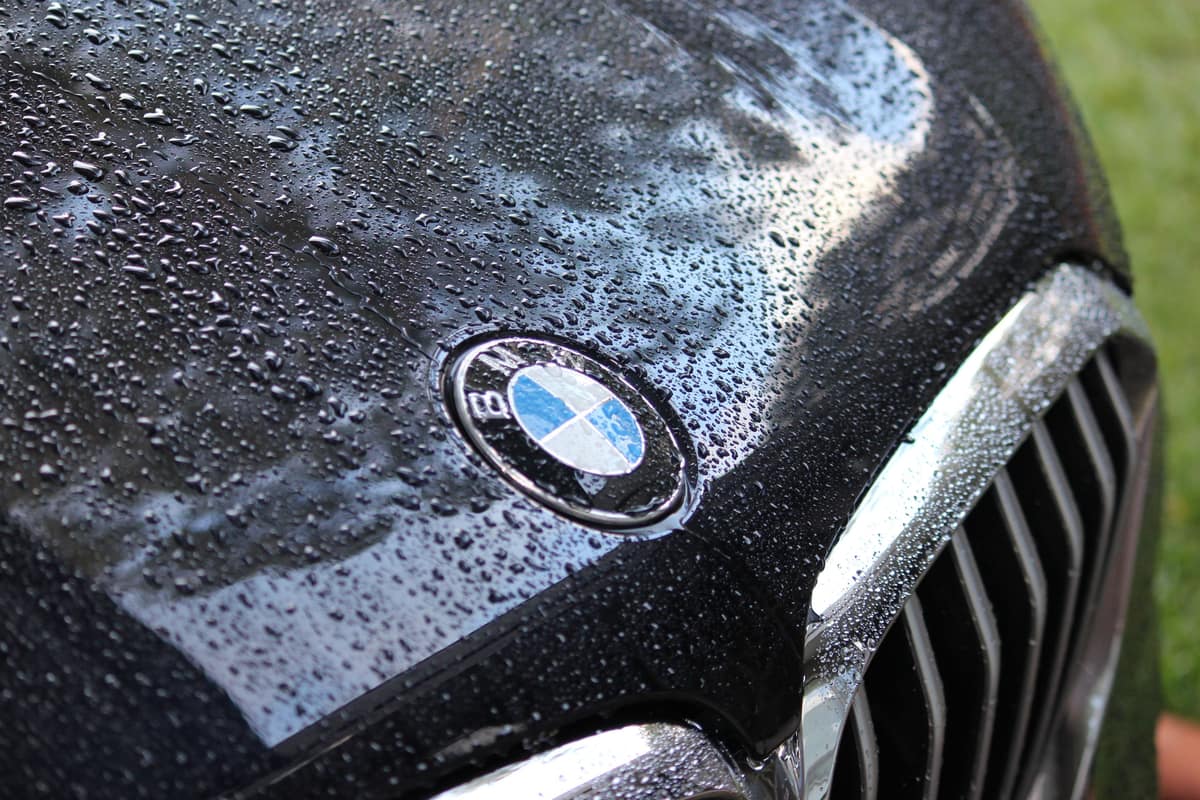
Side by side
| Graphene Ceramic Coating | Graphene Ceramic Coating Advanced | |
|---|---|---|
| Price | $119.99 | $144.99 |
| Size | 60ml | 60ml |
| Claimed durability | 7+ years | 9+ years |
| Claimed hardness | Greater than 10H | 10H |
| Contact angle | Not published | Averaging more than 110-118 degrees |
| Sliding angle | Not published | Water evacuates at less than 10-15 degrees |
| Resin content | Not published | 50% higher than the standard |
| Cure time | 24 hours free from water and weather | Not published |
| In the box | Coating, 4oz Graphene Boost, 4oz Surface Prep, 4 towels, 2 applicators, gloves | Not published |
| Published coverage | Not published | Not published |
What the extra $25 actually buys
Three things, all of them published. Fifty percent more coating resin than the standard version, stated as a figure rather than as a feeling. A contact angle averaging more than 110 to 118 degrees. And a sliding angle at which water leaves the panel, given as less than 10 to 15 degrees.
The resin figure is the most concrete of the three, because it is a comparison against a product you can also buy, from the maker of both. More resin in the bottle means more material left on the panel per pass, which is the mechanism behind almost every durability claim in this category. It does not tell you how much longer it lasts, and Adam’s do not publish a test that connects the two.
The fourth difference is the one in the marketing rather than the specification: 9+ years against 7+. Two more years on a claim that already sits beyond any realistic ownership period is not a reason to spend $25, which is why it comes last here rather than first.
The contact angle is the only measured number in this matchup
A contact angle is the angle a water droplet makes where it meets the paint. A low angle means the droplet spreads out; a high one means it stands up as a bead. Above about 100 degrees a surface is called hydrophobic, and 110 to 118 degrees is a strong published figure for a consumer coating.
It is worth something precisely because almost nobody prints it. Across every coating in this ledger, this is the only product with a contact angle on its page, and it is the nearest thing to a performance measurement anyone in this category offers. The sliding angle is its practical companion: it describes how far you have to tilt a panel before water runs off, which is what self-cleaning actually means on a moving car.
Two honest limits. Both figures describe a fresh coating, not one that has been through eighteen months of winter, and neither Adam’s nor anybody else publishes how the angle decays. And beading is not protection: a coating that beads well can still be failing chemically. Beading is the symptom people watch because it is the symptom you can see.
The cheaper bottle is the more complete purchase
This is where the comparison turns. The standard coating publishes its kit contents in full: the 60ml bottle, a 4oz Graphene Boost, a 4oz Surface Prep, four towels, two applicators and gloves. That is the whole job in one box, including the panel wipe step that decides whether a coating bonds at all.
Adam’s publish no box contents for Advanced. That is not evidence the box is empty; it is an absence on the page, and this site ranks on what is published. If you are buying your first coating and the $144.99 bottle turns out to be a bottle, the prep and the applicators become a second purchase and the gap is no longer $25.
The same asymmetry runs through the cure window. The standard page states 24 hours free from water and weather, which is the single most useful sentence on a coating listing because it decides which weekend you can do the job. Advanced does not publish one.
What does not change between them
Both are 60ml. Both are graphene coatings from the same maker with a UV tracer so you can see where you have already worked, which genuinely helps on a black car under poor light. Both publish a hardness claim of 10H, and neither publishes a graphene or SiO2 percentage, so the chemistry is unquantified on both sides.
The application is also the same job: decontaminate, polish if you are going to, panel wipe, then coat in small sections and level before it flashes. The application guide covers the method, and the high-spot page covers the mistake both products punish identically. Neither bottle forgives bad prep, and no amount of resin compensates for coating over a dirty panel.
What both bottles leave out that rivals print
Neither Adam’s page publishes a consumption figure, and that is the gap worth naming, because competitors do. Gyeon publish 15 to 25ml per car for their flagship and 10 to 15ml for CanCoat, which turns a bottle price into a cost per car before you buy. On a 60ml bottle at $119.99 or $144.99, that arithmetic is the difference between one car and three, and neither of these products lets you do it.
The same is true of the water-free period. Adam’s publish 24 hours for the standard coating and nothing for Advanced; Gyeon publish 12 hours for both of theirs. A shorter published window is a genuine planning advantage in a climate where a dry weekend is not guaranteed, and it is the sort of figure that decides a purchase far more often than a nine-year claim does.
None of that makes either Adam’s coating a bad product. It means the two of them are harder to compare with anything outside their own range, which is worth knowing before you treat the tier difference as the only decision in front of you. The coating roundup ranks the field on exactly these published figures.
A note on the 10H claim, which appears on both
Both pages lead with 10H. The pencil hardness scale that number comes from tops out at 9H, so 10H is a marketing figure rather than a reading from the standard it borrows its name from. It appears on both products here, which is convenient: since both make the same unverifiable claim, it cancels out of this particular decision entirely.
What it means in practice is that neither coating stops scratches. The scratch question covers what a coating does and does not do to your paint, and it is the expectation most first-time buyers get wrong regardless of which of these two they choose.
Who should buy which
- Your first coating: the standard at $119.99, for the published cure window and the complete kit.
- You already own prep and applicators: Advanced at $144.99, where the $25 buys resin rather than towels.
- You want a measured number rather than a claim: Advanced, on the published contact angle.
- You want to know how many cars a bottle does: neither publishes it.
- You want the longest claim on paper: Advanced at 9+ years, for whatever a 9-year claim is worth.
Every pick, with the working
Each entry lists the specifications the maker publishes, the axis scores those specifications produce, and what you give up. Rows that read “Not published” are not omissions on our side: they are figures the maker will not commit to in writing, and they cost the product points on the transparency axis.
Our pickThe biggest claim on the page, and the fullest kit
Adam's Graphene Ceramic Coating
Adam's Polishes
Skip this one. A 7+ year claim on a DIY coating is the kind of number that is impossible to falsify inside the warranty period and impossible to verify outside it. If the claim is what is selling you, buy the coating that publishes a coverage figure instead.
Adam's publishes 7+ years of protection and >10H hardness on a 60ml bottle at $119.99, in a kit that includes surface prep, a booster, applicators, towels and gloves. The claim is the largest in this ledger by a factor of two, and Adam's publishes no coverage figure to go with it, so you cannot work out how many cars the bottle does.
- Size
- 60ml
- Claimed durability
- 7+ years
- Claimed hardness
- Greater than 10H
- Cure time
- 24 hours free from water and weather
- In the box
- 60ml coating, 4oz Graphene Boost, 4oz Surface Prep, 4 towels, 2 applicators, gloves
- Published coverage
- Not published
- SiO2 content
- Not published
- Warranty
- Not published
What it does well
- 7+ years claimed, the longest figure any maker in this ledger publishes
- Kit is genuinely complete: 4oz Surface Prep, 4oz Graphene Boost, applicators, suede and soft towels, gloves
- 24-hour cure window published plainly on the page
- A UV tracing feature is offered so you can see where you have already coated
Who it is not for
- No coverage or consumption figure published, so cost per car is not calculable from Adam's own numbers
- No SiO2 or graphene percentage published; >10H hardness is a claim, not a number you can check
- $119.99 is the highest list price here and the bottle is 60ml
How this score was calculated
- Protection claim10.0/10, weight 20%
- Adam's Polishes claims 84 months, scored against the 60-month ceiling this category tops out at. That is the manufacturer's claim reported here, not a durability figure anyone measured for us.
- Capabilitydropped
- Adam's Polishes does not publish a figure for published sio2 content on this product, so the axis is dropped and the remaining weights are re-normalized.
- Cost per ounce4.4/10, weight 16%
- $119.99 for 2.03 oz works out at $59.11 an ounce, scored against a band of $20.00 (good) to $90.00 (expensive) for a ceramic coating.
- Price against the ceiling2.0/10, weight 14%
- A listed $119.99 against the $150 one upgrade in this category realistically tops out at. A list price captured on the compile date, not a live price and not what you will pay.
- Written commitmentdropped
- Adam's Polishes publishes no warranty term on this product's own page, so the axis is dropped. On a tool that is worth noticing, and it costs the product points on transparency instead.
- Spec transparency6.3/10, weight 18%
- 5 of the 8 specifications we went looking for are published by Adam's Polishes. Every blank row below is something the maker will not put in writing, and it costs the product points here.
List price $119.99 per Adam's Polishes' own store, captured on the compile date below. Not a live price and not what you will pay — the button is where the real number is.
Specifications from Adam's Graphene Ceramic Coating product page, compiled September 8, 2026.
2The largest published claim in this ledger
Adam's Graphene Ceramic Coating Advanced
Adam's Polishes
60ml at $144.99, and the only coating on this site that publishes contact and sliding angles. Adam's states 10H hardness, 9+ years of protection, 50% more resin than the standard version, contact angles averaging 110 to 118 degrees and water leaving at 10 to 15 degrees.
- Size
- 60ml
- Claimed durability
- 9+ years
- Claimed hardness
- 10H
- Contact angle
- Averaging more than 110-118 degrees
- Sliding angle
- Water evacuates at less than 10-15 degrees
- Resin content
- 50% higher than the standard Graphene Ceramic Coating
- Published coverage
- Not published
- Graphene content
- Not published
- Warranty
- Not published
What it does well
- Contact angle published at 110-118 degrees — a real measured number almost nobody in this category prints
- Sliding angle published at 10-15 degrees
- 50% increased coating resin over the standard version, stated as a figure
- UV tracer technology means you can see what you have already coated
Who it is not for
- 9+ years on a DIY coating cannot be verified inside any useful timeframe
- No coverage figure, so cost per car is not calculable from a $144.99 bottle
- No graphene or SiO2 percentage published
How this score was calculated
- Protection claim10.0/10, weight 20%
- Adam's Polishes claims 108 months, scored against the 60-month ceiling this category tops out at. That is the manufacturer's claim reported here, not a durability figure anyone measured for us.
- Capabilitydropped
- Adam's Polishes does not publish a figure for published sio2 content on this product, so the axis is dropped and the remaining weights are re-normalized.
- Cost per ounce2.7/10, weight 16%
- $144.99 for 2.03 oz works out at $71.42 an ounce, scored against a band of $20.00 (good) to $90.00 (expensive) for a ceramic coating.
- Price against the ceiling0.3/10, weight 14%
- A listed $144.99 against the $150 one upgrade in this category realistically tops out at. A list price captured on the compile date, not a live price and not what you will pay.
- Written commitmentdropped
- Adam's Polishes publishes no warranty term on this product's own page, so the axis is dropped. On a tool that is worth noticing, and it costs the product points on transparency instead.
- Spec transparency6.7/10, weight 18%
- 6 of the 9 specifications we went looking for are published by Adam's Polishes. Every blank row below is something the maker will not put in writing, and it costs the product points here.
List price $144.99 per Adam's Polishes' own store, captured on the compile date below. Not a live price and not what you will pay — the button is where the real number is.
Specifications from Adam's Graphene Ceramic Coating Advanced product page, compiled September 8, 2026.
Prices last verified September 30, 2026. They move constantly; the figure on Amazon when you click is the real one.
Questions people actually ask
+Is Adam's Advanced graphene coating worth the extra money?
+What is a good contact angle for a ceramic coating?
+Do both versions last as long as Adam's claims?
+Can you put Advanced over the standard coating?
Where these figures came from
- Adam's Graphene Ceramic Coating product page — retrieved 2026-09-30
- Adam's Graphene Ceramic Coating Advanced product page — retrieved 2026-09-30
Every figure on this page is a published manufacturer or authorized-retailer claim, not a measurement we made. How we research explains exactly what we did and did not do.