Wash and Decontamination
How to Clean Car Door Jambs
The jamb is painted bodywork that never gets washed and never gets dried, which is why it is the one surface a passenger notices and nobody cleans. Fifteen minutes puts four of them right.
By Sawyer V. · Last verified 2026-10-25
We have not tested any of this. Everything below is compiled from published manufacturer specifications, and the arithmetic is printed so you can check it. This page carries affiliate links: if you buy through one we earn a commission at no extra cost to you, and it does not change the order of the picks. Full disclosure.
| # | Pick | Best for | Score | Price |
|---|---|---|---|---|
| 1 | Meguiar's Professional D101 All Purpose Cleaner Meguiar's | The only concentrate here that publishes both of its ratios | 7.3/10 | $24.99 - view on Amazon |
| 2 | Detail Factory Ultra-Soft Synthetic Detailing Brush Set Detail Factory | Piano black trim and screens | 4.9/10 | $21.95 - view on Amazon |
| 3 | Detail Factory Boar Detailing Brush Set Detail Factory | Engine bays, calipers and exhaust tips | 4.9/10 | $21.95 - view on Amazon |
| 4 | Eagle Edgeless 350 The Rag Company | Coating removal and general work, at the lowest GSM here | 3.9/10 | $25.95 - view on Amazon |
| 5 | 303 Automotive Protectant 303 | A dry, non-greasy finish with a UV claim | 4.3/10 | $17.03 - view on Amazon |
| 6 | Chemical Guys ProBlow Handheld Dryer & Blower Chemical Guys | The cheapest way to stop touching wet paint | 5.1/10 | $74.98 - view on Amazon |
| 7 | Griot's Garage Speed Shine Griot's Garage | The one that is explicitly safe on PPF | 4.5/10 | $12.99 - view on Amazon |
| 8 | Chemical Guys Spinner Multi-Surface Drill Brush, Heavy Duty Chemical Guys | Nothing in a car | 5.4/10 | $21.99 - view on Amazon |
Prices last verified November 9, 2026. They move constantly; the figure on Amazon when you click is the real one.
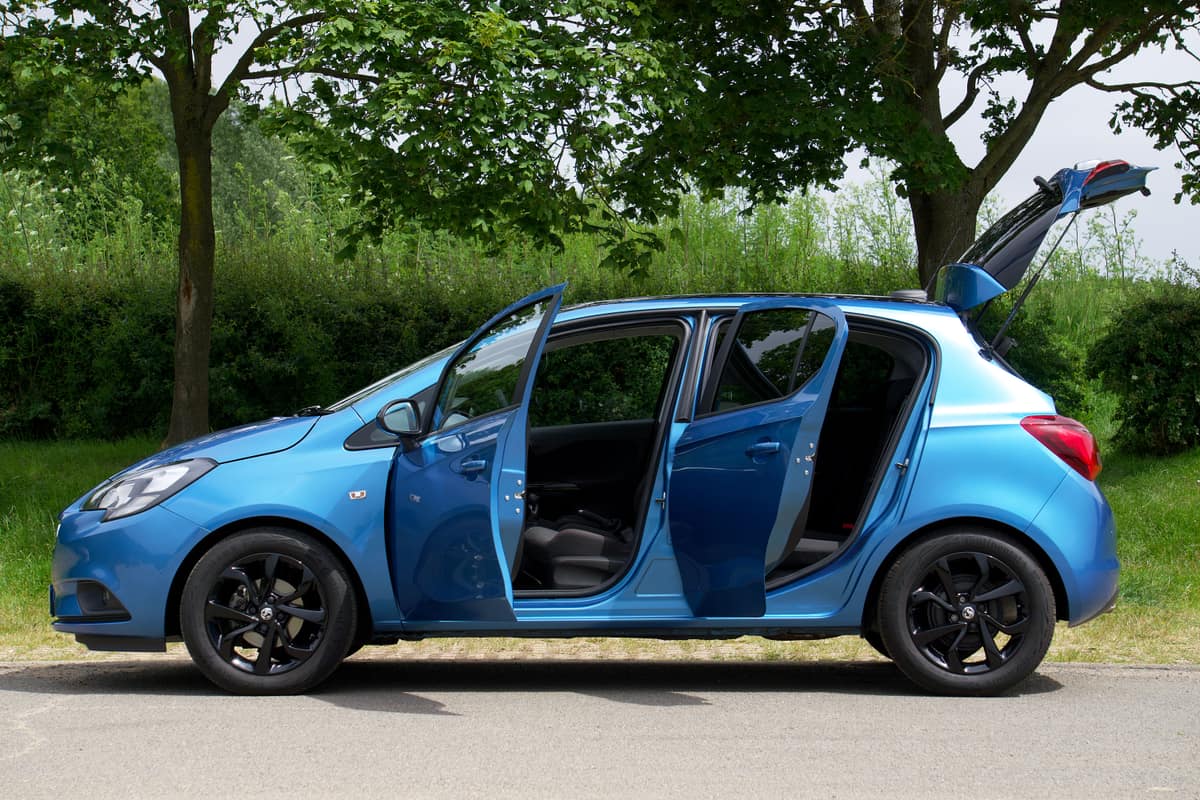
What is actually in a door jamb
“Door jamb” is a loose word for several different surfaces that happen to live in one opening, and the reason jamb cleaning goes wrong is that people treat them as one surface. Open a door and you are looking at painted bodywork, unpainted rubber, bare and greased metal, an electrical switch and a printed sticker, all within a hand’s width of each other.
| Part of the opening | What it is | What it wants |
|---|---|---|
| Shut face of the door | Body paint, usually unwaxed | Soft brush, light chemical, no abrasive |
| Jamb face on the body | Body paint, with seams and spot welds | The same, plus patience in the seams |
| Weatherstrip | Rubber or EPDM seal, both on the door and the body | Cleaning, then a non-greasy protectant |
| Sill and lower jamb | Paint plus grit, salt and shoe dirt | Stiffer brush, most of the work |
| Hinges and check strap | Bare and greased metal | Degrease carefully; do not strip the pivot grease |
| Latch and striker | Moving mechanism, factory grease | Keep chemicals and water out |
| Door switch | Electrical switch for the interior light | A damp towel only |
| VIN and tire-pressure placard | Printed sticker | Wipe, never scrub |
Why jambs are the dirtiest painted surface on the car
A washed car looks finished from three feet away and unfinished the moment a door opens. The reason is mechanical rather than moral. Water runs along panel gaps and out through the shuts, and it carries with it everything the wash loosened: brake dust, road film and, for half the year, salt. The jamb is where that water stops moving.
Nothing then dries it. A towel reaches the outside of a panel and the top of a sill, and a blower pointed at a closed car pushes water further into the shut rather than out of it. The jamb is also the one painted area most people never protect, so there is no wax or sealant layer for the grime to sit on top of. It sits on paint.
In winter the stakes change. Brine collects in the sill and the lower jamb and stays damp against paint and seams for weeks. Washing a car in winter covers the rest of that argument, and cleaning wheel wells is the same job at the other end of the same problem: the places that hold salt against metal are the places nobody cleans.
Where jambs come in the order
Jambs go after the panels and before the car is dried. That ordering has one reason behind it: whatever you do in an opening ends up on the paint below it, and whatever you do to the paint ends up in the opening. If you wash the car after cleaning the jambs, dirty water runs back into them. If you dry the car first, you then open a door and put a wet towel through a dry opening.
A neglected car is the exception. If the jambs have not been touched in a year, do them as their own job on a dry car, with the doors opened one at a time, and accept that the first pass is a decontamination rather than a wipe. After that they stay clean with a wipe per wash.
The chemistry, and the two ratios Meguiar’s print
This is an all-purpose cleaner job. An interior cleaner is too mild for a sill, a wheel cleaner is formulated for brake dust on a finished surface and has no business near a rubber seal, and a degreaser used neat on a painted shut face is a stain waiting to happen.
Meguiar’s Professional D101 is the one in this ledger that prints both of its ratios: 4:1 for heavy-duty work, which they name for tires, engine bays and badly soiled upholstery, and 10:1 for general cleaning. A gallon is $19.95 at an authorized retailer, about 16 cents an ounce before it is diluted. For a jamb, 10:1 is the working strength and 4:1 is for a sill that has a winter’s worth of salt in it. The same listing tells you to test an inconspicuous area first, which is the honest version of “safe on everything”.
Two cautions that follow from the published surface list rather than from opinion. Meguiar’s name rubber and plastic among the surfaces, so the seal can be cleaned with it at the light ratio; they publish nothing about whether it strips a wax or a sealant, so assume it does and re-protect anything you cared about. And no maker in this category publishes a pH, which is why dilution and dwell time are the only two controls you actually have. The all-purpose cleaner roundup compares the field on what each one is willing to print.
Two brushes, and what each one may touch
The product cluster beside this search is “door jamb cleaning brush”, and the honest answer is that no brush is sold specifically for jambs because two brushes you probably want anyway cover it. The division is by surface, not by price.
Detail Factory’s ultra-soft synthetic set is $17.95 at their own store and is named for piano-black panels and badges: the surfaces where a bristle you can feel leaves a mark. That is the brush for the painted shut face, the painted jamb and the seal, and the same brush does the badges on the outside of the car. Their boar-hair set is the same price and is named for engine bays, brake calipers, exhaust tips and wheel faces. That is the brush for the sill, the hinge area and the striker, and Detail Factory say plainly that boar hair will mar soft surfaces, which is the reason to own both rather than compromise with one.
Neither maker publishes a bristle length or a brush count, which is worth knowing before you order: you are buying a named use case, not a specification. The detailing brush roundup covers the rest of the field, including the long-handled brushes that belong in an arch rather than a jamb.
The latch, the striker and the door switch
Three things in the opening are mechanisms rather than surfaces, and all three are damaged by the same instinct: spraying cleaner into them because they look dirty.
- The latch is a greased mechanism inside the door edge. All-purpose cleaner washes that grease out, and a dry latch is both noisy and slow to release. Clean around the opening, not into it.
- The striker on the body side is a greased post. Wipe the paint around it and leave the grease where it is; if it is dry or squeaking, the lubricant your car maker specifies is in the owner's manual, and that is a maintenance question rather than a detailing one.
- The door switch is the little plunger that turns the interior light on and off. It is an electrical switch. A damp towel around it is the whole method, and a pressure washer pointed at it is how a courtesy light starts behaving strangely in the rain.
The printed placard belongs in the same list for a different reason. The sticker in the jamb carries the VIN and the factory tire pressures, and it is printed rather than engraved. Wipe it flat with a damp towel and never take a brush to it; a scrubbed placard is a blank placard, and the tire pressures on it are the ones everything else about the car assumes.
The weatherstrip is the part that actually fails
Paint in a jamb gets dirty. Rubber in a jamb gets old. The seal is the only part of the opening with a failure mode that costs money: it hardens, it shrinks away from the body, and the first symptoms are wind noise at highway speed and a damp carpet edge after rain.
Clean it with the same diluted cleaner and a soft brush, dry it, and then protect it with something that does not leave a film. 303 Automotive Protectant is the one in this ledger whose maker page states both of the properties that matter here: a UV protection claim for vinyl, rubber and plastic, and a non-greasy finish. What 303 do not publish is a UV rating, a durability figure, a size or a list price, so there is no honest way to tell you how often to reapply it; the practical answer is every few washes, when water stops sitting on the seal in beads.
The thing to avoid is a glossy silicone dressing. Chemical Guys’ VRP, for example, is a perfectly good protectant that states UV protection and names vinyl, rubber and plastic, and it is built to leave a deep black shine. On a dashboard that is the point. On a weatherstrip a glossy film collects dust, and anything slick on the seal transfers onto the shoulder of a coat every time somebody gets in. Tire dressing on a door seal is the same mistake with more silicone behind it.
Towels, and why jamb towels stay jamb towels
A jamb towel picks up grit, hinge grease and salt. Put it back in the same pile as your paint towels and the next person to use it is wiping a hood with it.
The Rag Company’s Eagle Edgeless 350 is a sensible towel to buy for this: $18.40 for five 16 by 16 inch towels at a published 350gsm, edgeless and tag-free, so there is no stitched seam to drag down a painted shut face. A lighter towel is also easier to fold into the quarters a jamb actually needs. Keep the pack for jambs, sills and arches, wash them separately, and the microfiber detergent page covers the rest.
Water, and getting it back out
The sub-intent “how to wash car door jambs” is really a question about water: how much is safe, and where does it go afterward. Two rules cover it. Use as little as the job allows, because every drop that goes into a seam has to come back out of it. And get the rest out before you close the door on it.
A blower is the fastest way to do that, and it is the same tool that keeps drips from appearing on a dried car ten minutes later. Chemical Guys’ ProBlow is $69.99 for a 1000 watt corded handheld, which is the cheapest entry into touchless drying in this ledger; what Chemical Guys publish is the motor rating and an extra-long cord, and nothing about CFM, air speed, weight or filtration, so buy it on price and on the fact that it is corded rather than on an airflow figure nobody prints. The car dryer roundup ranks that field on the figures that are published, and it is also the page to read before spending four times as much.
If you have no blower, a towel through the opening and five minutes with the door open is enough. What matters is that the seal and the sill are dry before the door closes.
Between washes
Once a jamb is clean it stays clean with a wipe. A quick detailer on a folded towel, one pass per opening, takes under a minute a door and is the difference between a jamb you clean twice a year and one you decontaminate twice a year.
Griot’s Speed Shine is $11.99 and is the one quick detailer in this ledger whose page states it is safe on paint protection film, and that matters in a jamb specifically: the leading edge of a door shut is one of the places PPF gets fitted. Griot’s also list it for moldings, wheels and interior plastic trim, which is most of what an opening contains. They publish no size on the product page, so cost per ounce cannot be worked out, and no durability claim — it is a wipe, not a protectant.
Six things not to do
- Do not put a pressure washer into an open jamb. The latch, the switch and the seam sealer are all things a 2000 psi jet reaches and a sponge does not.
- Do not use a drill brush. The skip on this page explains why; a jamb is paint with a seal down the middle of it.
- Do not scrub the VIN or tire-pressure placard. It is printed.
- Do not degrease the hinge pivot. Clean around it and leave the grease that is doing the work.
- Do not put a glossy dressing on the weatherstrip. It collects dust and transfers onto clothes.
- Do not close the door on a wet seal in freezing weather, and do not clean jambs at all on a car that is about to be parked outside overnight below freezing.
Who should buy what
- One product if you buy nothing else: Meguiar's D101, $19.95 a gallon, at 10:1 for jambs and 4:1 for a salted sill.
- The painted shut face and the seal: Detail Factory's ultra-soft synthetic set, $17.95.
- The sill, hinge area and striker: Detail Factory's boar set, $17.95, and keep it away from the paint above.
- Towels you are willing to ruin: Eagle Edgeless 350, $18.40 for five at 350gsm.
- The seal, after it is dry: 303 Automotive Protectant, which states a non-greasy finish and a UV claim and publishes no durability figure.
- Getting water back out of the opening: Chemical Guys ProBlow, $69.99, 1000 watts and corded.
- Keeping them clean between washes: Griot's Speed Shine, $11.99, stated safe on paint protection film.
- Skip the drill brush. Chemical Guys sell the heavy-duty Spinner for tile, grout and tubs, and a door jamb is none of those.
Jambs are also the first place a detail starts to look professional, which is why they appear in the order of operations rather than at the end of it. Clean them while the car is wet, dry them before the door closes, and the job is fifteen minutes that shows every time somebody gets in.
Every pick, with the working
Each entry lists the specifications the maker publishes, the axis scores those specifications produce, and what you give up. Rows that read “Not published” are not omissions on our side: they are figures the maker will not commit to in writing, and they cost the product points on the transparency axis.
Our pickThe only concentrate here that publishes both of its ratios
Meguiar's Professional D101 All Purpose Cleaner
Meguiar's
A gallon of professional dilutable APC at $19.95, with the two numbers this category usually withholds printed on the listing: 4:1 for heavy-duty work like tires, engine bays and badly soiled upholstery, and 10:1 for general interior cleaning. That is one more published figure than any other gallon on this page offers.
- SKU
- D10101 (1 gallon); D10105 (5 gallon)
- Published dilution
- 4:1 for heavy-duty cleaning; 10:1 for light-duty interior cleaning
- Stated surfaces
- Carpets, upholstery, vinyl, fabric, rubber, plastic, tires, engine bays
- Action
- Foaming, stated to lift dirt and grime
- Stated caution
- Test on an inconspicuous area before use
- pH
- Not published
- Effect on wax or sealant
- Not published
What it does well
- Both dilution ratios published: 4:1 heavy-duty, 10:1 light-duty
- $19.95 a gallon is about 16 cents an ounce before dilution, the cheapest here by volume
- Interior and exterior surfaces named: fabric, vinyl, rubber, plastic, carpets, upholstery, tires and engine bays
- Foaming action stated, which is what keeps a cleaner on a vertical surface long enough to work
- Sold as a gallon (D10101) and a 5 gallon (D10105), so a heavy user is not rebuying bottles
Who it is not for
- No pH published, like every other cleaner on this page
- Meguiar's own site could not be reached to verify these figures first-hand; they come from an authorized retailer republishing the maker's SKU and ratios
- Nothing published about protection: whether it strips a wax or a sealant is not addressed
- Gallon-only by the time it is this cheap, so a trial costs twenty dollars
- The retailer tells you to test it on an inconspicuous area first, which is the honest version of "safe on everything"
How this score was calculated
- Protection claimdropped
- Nothing in this category is bought on how long it lasts, so the axis is dropped and the other weights are re-normalized.
- Capabilitydropped
- No single published number decides capability in this category, so the axis is dropped rather than invented.
- Cost per ounce10.0/10, weight 16%
- $19.95 for 128 oz works out at $0.16 an ounce, scored against a band of $0.60 (good) to $2.00 (expensive) for a interior cleaner.
- Price against the ceiling4.3/10, weight 14%
- A listed $19.95 against the $35 one upgrade in this category realistically tops out at. A list price captured on the compile date, not a live price and not what you will pay.
- Written commitmentdropped
- Meguiar's publishes no warranty term on this product's own page, so the axis is dropped. On a tool that is worth noticing, and it costs the product points on transparency instead.
- Spec transparency7.1/10, weight 18%
- 5 of the 7 specifications we went looking for are published by Meguiar's. Every blank row below is something the maker will not put in writing, and it costs the product points here.
List price $19.95 per Car Supplies Warehouse, 1 gallon, captured on the compile date below. Not a live price and not what you will pay — the button is where the real number is.
Specifications from Car Supplies Warehouse, an authorized Meguiar's retailer, D101 listing, compiled September 8, 2026.
2Piano black trim and screens
Detail Factory Ultra-Soft Synthetic Detailing Brush Set
Detail Factory
$17.95 for a set with ultra-soft synthetic bristles, named specifically for piano-black panels and instrument clusters. Piano black is the most scratch-prone surface in a modern car and the only correct brush for it is one you cannot feel.
- Bristles
- Ultra-soft synthetic
- Stated surfaces
- Piano black panels, instrument and infotainment panels, badges
- Colors
- Ten
- Brush count
- Not published
- Bristle length
- Not published
- Handle material
- Not published
What it does well
- Named for piano black interior panels, which is the exact surface that ruins itself
- Synthetic bristles, so no boar hair to mar a soft surface
- Ten colors, which sounds trivial until you want to keep interior and wheel brushes apart
Who it is not for
- No bristle length or handle length published
- No brush count in the set published on the listing
- Too soft for anything with real dirt on it
How this score was calculated
- Protection claimdropped
- Nothing in this category is bought on how long it lasts, so the axis is dropped and the other weights are re-normalized.
- Capabilitydropped
- No single published number decides capability in this category, so the axis is dropped rather than invented.
- Cost per ouncedropped
- This is not a consumable, so cost per ounce says nothing useful and the axis is dropped.
- Price against the ceiling4.9/10, weight 14%
- A listed $17.95 against the $35 one upgrade in this category realistically tops out at. A list price captured on the compile date, not a live price and not what you will pay.
- Written commitmentdropped
- Detail Factory publishes no warranty term on this product's own page, so the axis is dropped. On a tool that is worth noticing, and it costs the product points on transparency instead.
- Spec transparency5.0/10, weight 18%
- 3 of the 6 specifications we went looking for are published by Detail Factory. Every blank row below is something the maker will not put in writing, and it costs the product points here.
List price $17.95 per Detail Factory's own store, captured on the compile date below. Not a live price and not what you will pay — the button is where the real number is.
Specifications from Detail Factory's Ultra-Soft brush set page, compiled September 8, 2026.
3Engine bays, calipers and exhaust tips
Detail Factory Boar Detailing Brush Set
Detail Factory
$17.95 for boar hair rather than synthetic, aimed at engine bays, brake calipers, exhaust tips and wheel faces. Boar hair is stiffer and it is the correct brush for anything you would not put a soft brush near.
- Bristles
- Boar hair
- Stated surfaces
- Engine bays, brake calipers, exhaust tips, wheel faces
- Sizes
- Large and small
- Brush count
- Not published
- Bristle length
- Not published
- Ferrule
- Not published
What it does well
- Named for the dirty jobs specifically: engine bays, calipers, exhaust tips, wheels
- Two sizes in the set, large for wheel faces and small for tight work
- Same price as the ultra-soft set, so owning both is $36
Who it is not for
- Boar hair will mar soft interior surfaces; it is not a substitute for the soft set
- No brush count or bristle length published
- Natural hair takes longer to dry and can hold odor
How this score was calculated
- Protection claimdropped
- Nothing in this category is bought on how long it lasts, so the axis is dropped and the other weights are re-normalized.
- Capabilitydropped
- No single published number decides capability in this category, so the axis is dropped rather than invented.
- Cost per ouncedropped
- This is not a consumable, so cost per ounce says nothing useful and the axis is dropped.
- Price against the ceiling4.9/10, weight 14%
- A listed $17.95 against the $35 one upgrade in this category realistically tops out at. A list price captured on the compile date, not a live price and not what you will pay.
- Written commitmentdropped
- Detail Factory publishes no warranty term on this product's own page, so the axis is dropped. On a tool that is worth noticing, and it costs the product points on transparency instead.
- Spec transparency5.0/10, weight 18%
- 3 of the 6 specifications we went looking for are published by Detail Factory. Every blank row below is something the maker will not put in writing, and it costs the product points here.
List price $17.95 per Detail Factory's own store, captured on the compile date below. Not a live price and not what you will pay — the button is where the real number is.
Specifications from Detail Factory's Boar brush set page, compiled September 8, 2026.
4Coating removal and general work, at the lowest GSM here
Eagle Edgeless 350
The Rag Company
$18.40 for a five-pack of 16 by 16 inch towels at a published 350gsm. A lighter towel is the right towel for leveling a coating: heavy plush grabs residue and drags it, and 350 is where control starts.
- GSM
- 350
- Dimensions
- 16 in x 16 in
- Pack
- 5
- Edge
- Edgeless, tag-free
- Blend
- Not published
- Wash cycles rated
- Not published
What it does well
- 350gsm published, and the lower weight is a feature rather than a compromise for this job
- Five towels for $18.40, the best per-towel price in this group
- Edgeless and tag-free, so there is no seam to drag across fresh coating
Who it is not for
- Too light for drying a whole car
- Only two colors
- No blend split published
How this score was calculated
- Protection claimdropped
- Nothing in this category is bought on how long it lasts, so the axis is dropped and the other weights are re-normalized.
- Published GSM1.5/10, weight 22%
- 350 gsm, scored on a band running from 250 to 900. Published by The Rag Company.
- Cost per ouncedropped
- This is not a consumable, so cost per ounce says nothing useful and the axis is dropped.
- Price against the ceiling3.9/10, weight 14%
- A listed $18.40 against the $30 one upgrade in this category realistically tops out at. A list price captured on the compile date, not a live price and not what you will pay.
- Written commitmentdropped
- The Rag Company publishes no warranty term on this product's own page, so the axis is dropped. On a tool that is worth noticing, and it costs the product points on transparency instead.
- Spec transparency6.7/10, weight 18%
- 4 of the 6 specifications we went looking for are published by The Rag Company. Every blank row below is something the maker will not put in writing, and it costs the product points here.
List price $18.40 per The Rag Company, 5-pack, captured on the compile date below. Not a live price and not what you will pay — the button is where the real number is.
Specifications from The Rag Company's Eagle Edgeless 350 listing, compiled September 8, 2026.
5A dry, non-greasy finish with a UV claim
303 Automotive Protectant
303
303 publishes a UV protection claim for vinyl, rubber and plastic and describes a non-greasy finish, which is the pair of properties that separates a modern protectant from an old-fashioned dressing. What it does not publish is a UV rating, a durability figure or a price.
- Stated surfaces
- Vinyl, rubber and plastic
- Stated protection
- UV damage, fading and cracking
- Finish
- Non-greasy
- UV rating
- Not published
- Claimed durability
- Not published
- Size
- Not published
- List price
- Not published
What it does well
- Non-greasy finish stated on the manufacturer page, which is the practical difference from a silicone gloss dressing
- UV protection claimed specifically against fading and cracking rather than as a generic benefit
- Sold for automotive, marine and RV use, so the same bottle covers more than the car
Who it is not for
- No UV rating or SPF-equivalent figure published
- No durability figure published
- No size or list price published on the manufacturer page
How this score was calculated
- Protection claimdropped
- 303 publishes no durability figure for this product, so the axis is dropped rather than guessed at.
- Capabilitydropped
- No single published number decides capability in this category, so the axis is dropped rather than invented.
- Cost per ouncedropped
- Either the list price or the container size is unpublished, so the division cannot be done and the axis is dropped.
- Price against the ceilingdropped
- The maker publishes no list price, so there is nothing to score here and the axis is dropped.
- Written commitmentdropped
- 303 publishes no warranty term on this product's own page, so the axis is dropped. On a tool that is worth noticing, and it costs the product points on transparency instead.
- Spec transparency4.3/10, weight 18%
- 3 of the 7 specifications we went looking for are published by 303. Every blank row below is something the maker will not put in writing, and it costs the product points here.
Specifications from Gold Eagle's 303 Automotive Protectant page, compiled September 8, 2026.
6The cheapest way to stop touching wet paint
Chemical Guys ProBlow Handheld Dryer & Blower
Chemical Guys
$69.99 for a 1000 watt corded blower — twice the wattage of the Adam's unit for a third of the money. Chemical Guys publish the motor rating and an extra-long cord and nothing else: no CFM, no air speed, no weight, no filtration.
- Motor
- 1000 watts
- Cord
- Stated extra-long
- Air volume
- Not published
- Air speed
- Not published
- Weight
- Not published
- Filtration
- Not published
- Warranty
- Not published
What it does well
- $69.99 is by far the cheapest entry into touchless drying
- 1000 watt motor published, the highest wattage figure in this group
- Extra-long cord stated, which is the practical constraint on a corded blower
Who it is not for
- No CFM, no air speed, no weight and no filtration published
- Wattage measures power drawn, not air moved, so it is not comparable to a CFM figure
- Corded
How this score was calculated
- Protection claimdropped
- Nothing in this category is bought on how long it lasts, so the axis is dropped and the other weights are re-normalized.
- Capabilitydropped
- Chemical Guys does not publish a figure for published air volume on this product, so the axis is dropped and the remaining weights are re-normalized.
- Cost per ouncedropped
- This is not a consumable, so cost per ounce says nothing useful and the axis is dropped.
- Price against the ceiling8.0/10, weight 14%
- A listed $69.99 against the $350 one upgrade in this category realistically tops out at. A list price captured on the compile date, not a live price and not what you will pay.
- Written commitmentdropped
- Chemical Guys publishes no warranty term on this product's own page, so the axis is dropped. On a tool that is worth noticing, and it costs the product points on transparency instead.
- Spec transparency2.9/10, weight 18%
- 2 of the 7 specifications we went looking for are published by Chemical Guys. Every blank row below is something the maker will not put in writing, and it costs the product points here.
List price $69.99 per Chemical Guys' own store, captured on the compile date below. Not a live price and not what you will pay — the button is where the real number is.
Specifications from Chemical Guys ProBlow product page, compiled September 8, 2026.
7The one that is explicitly safe on PPF
Griot's Garage Speed Shine
Griot's Garage
$11.99, and the only quick detailer in this ledger whose page states it is safe for use on paint protection film. If your car wears PPF, that single line is worth more than any gloss claim on this page.
- Stated PPF safety
- Safe for use on paint protection films
- Stated surfaces
- Paint, moldings, wheels, interior plastic trim
- Size
- Not published
- Claimed durability
- Not published
- Published coverage
- Not published
What it does well
- Stated safe on paint protection film, which is rare and specific
- Also listed for moldings, wheels and interior plastic trim
- Griot's replaces anything you are not happy with
Who it is not for
- No size published on the product page, so cost per ounce cannot be worked out
- No durability claim
- No coverage figure published
How this score was calculated
- Protection claimdropped
- Griot's Garage publishes no durability figure for this product, so the axis is dropped rather than guessed at.
- Capabilitydropped
- No single published number decides capability in this category, so the axis is dropped rather than invented.
- Cost per ouncedropped
- Either the list price or the container size is unpublished, so the division cannot be done and the axis is dropped.
- Price against the ceiling5.2/10, weight 14%
- A listed $11.99 against the $25 one upgrade in this category realistically tops out at. A list price captured on the compile date, not a live price and not what you will pay.
- Written commitmentdropped
- Griot's Garage publishes no warranty term on this product's own page, so the axis is dropped. On a tool that is worth noticing, and it costs the product points on transparency instead.
- Spec transparency4.0/10, weight 18%
- 2 of the 5 specifications we went looking for are published by Griot's Garage. Every blank row below is something the maker will not put in writing, and it costs the product points here.
List price $11.99 per Griot's Garage's own store, captured on the compile date below. Not a live price and not what you will pay — the button is where the real number is.
Specifications from Griot's Garage Speed Shine page, compiled September 8, 2026.
8Nothing in a car
Chemical Guys Spinner Multi-Surface Drill Brush, Heavy Duty
Chemical Guys
Skip this one. A drill brush is the wrong tool for a door jamb, and this is the stiffest one in its range: Chemical Guys market it for tile, grout and tubs. The jamb is painted bodywork with a rubber seal running down the middle of it, and a stiff brush spinning at drill speed will burnish the paint and chew the seal. Chemical Guys sell a medium-duty version for car carpet at the same price, which is the one that belongs in a car at all.
$21.99 for the stiffest brush in the Spinner range, which Chemical Guys market for tile, grout and tubs. On car carpet that is a warning, not a feature.
- Stiffness
- Heavy (stiff)
- Stated surfaces
- Tile, grout, tubs
- Diameter
- Not published
What it does well
- Stiff bristles, stated
- Part of a range with softer options
Who it is not for
- Marketed for tile, grout and tubs rather than car interiors
- No diameter published
- The same price as the medium brush that is sold for cars
How this score was calculated
- Protection claimdropped
- Nothing in this category is bought on how long it lasts, so the axis is dropped and the other weights are re-normalized.
- Capabilitydropped
- No single published number decides capability in this category, so the axis is dropped rather than invented.
- Cost per ouncedropped
- This is not a consumable, so cost per ounce says nothing useful and the axis is dropped.
- Price against the ceiling3.7/10, weight 14%
- A listed $21.99 against the $35 one upgrade in this category realistically tops out at. A list price captured on the compile date, not a live price and not what you will pay.
- Written commitmentdropped
- Chemical Guys publishes no warranty term on this product's own page, so the axis is dropped. On a tool that is worth noticing, and it costs the product points on transparency instead.
- Spec transparency6.7/10, weight 18%
- 2 of the 3 specifications we went looking for are published by Chemical Guys. Every blank row below is something the maker will not put in writing, and it costs the product points here.
List price $21.99 per Chemical Guys' own store, captured on the compile date below. Not a live price and not what you will pay — the button is where the real number is.
Specifications from Chemical Guys Spinner Heavy Duty product page, compiled September 8, 2026.
Prices last verified November 9, 2026. They move constantly; the figure on Amazon when you click is the real one.
Questions people actually ask
+What is the best way to clean car door jambs?
+What can I use to clean door jambs?
+How do you clean a door jamb switch?
+How often should door jambs be cleaned?
+Can I pressure wash door jambs?
+Are door jamb protectors or jamb wraps worth it?
Where these figures came from
- Car Supplies Warehouse, an authorized Meguiar's retailer, D101 listing — retrieved 2026-10-25
- Detail Factory's Ultra-Soft brush set page — retrieved 2026-10-25
- Detail Factory's Boar brush set page — retrieved 2026-10-25
- The Rag Company's Eagle Edgeless 350 listing — retrieved 2026-10-25
- Gold Eagle's 303 Automotive Protectant page — retrieved 2026-10-25
- Chemical Guys' ProBlow listing — retrieved 2026-10-25
- Griot's Garage Speed Shine page — retrieved 2026-10-25
Every figure on this page is a published manufacturer or authorized-retailer claim, not a measurement we made. How we research explains exactly what we did and did not do.