Wash and Decontamination
Car Detailing vs Car Wash
A wash cleans the surface. Detailing decontaminates it, corrects it and protects it. The difference is not thoroughness, it is which layer you are working on.
By Sawyer V. · Last verified 2026-09-08
We have not tested any of this. Everything below is compiled from published manufacturer specifications, and the arithmetic is printed so you can check it. This page carries affiliate links: if you buy through one we earn a commission at no extra cost to you, and it does not change the order of the picks. Full disclosure.
| # | Pick | Best for | Score | Price |
|---|---|---|---|---|
| 1 | P&S Pearl Auto Shampoo Concentrate P&S | The cheapest gallon of professional soap here | 7.3/10 | $31.99 - view on Amazon |
| 2 | Adam's Iron Remover Adam's Polishes | The default, and the one with the clearest safety wording | 7.0/10 | $67.99 - view on Amazon |
| 3 | ULTRA Clay Mitt The Rag Company | Doing a whole car without losing an afternoon | 4.3/10 | $41.95 - view on Amazon |
| 4 | Collinite No. 845 Insulator Wax Collinite | The only wax here that publishes a coverage figure | 5.1/10 | $31.99 - view on Amazon |
Prices last verified October 23, 2026. They move constantly; the figure on Amazon when you click is the real one.
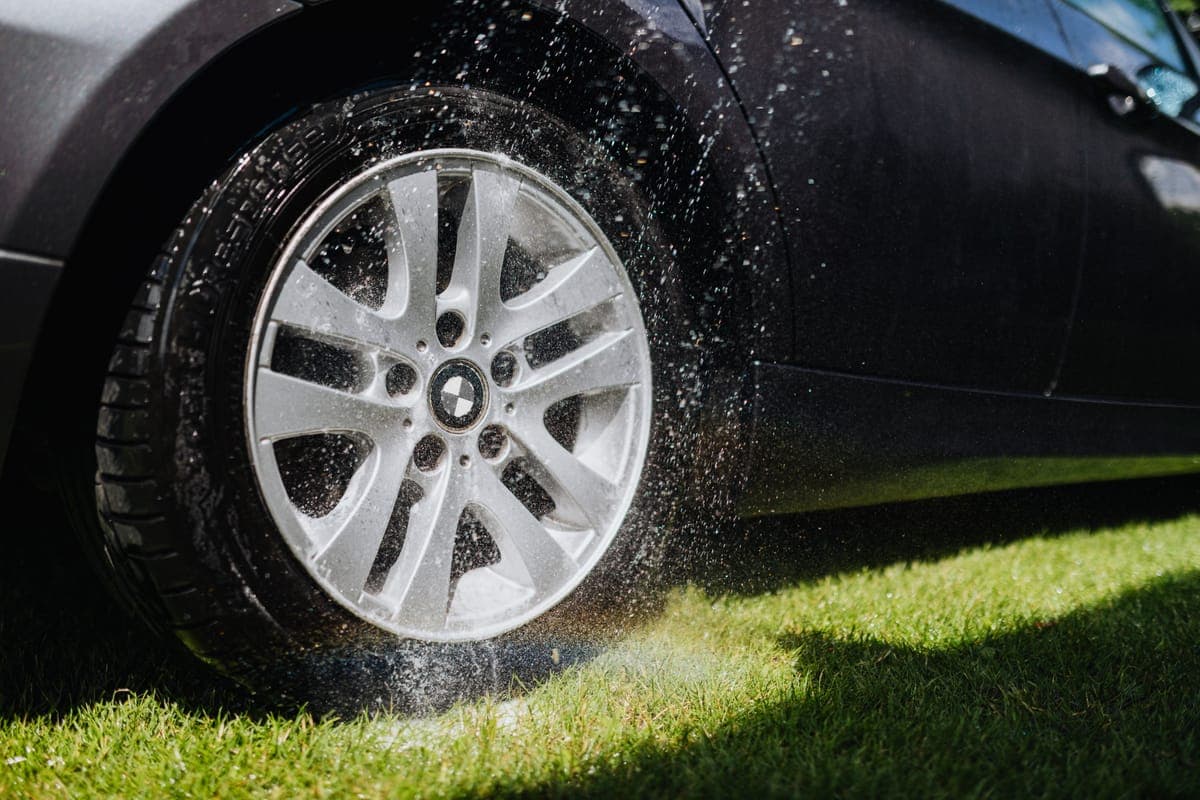
Three layers, three jobs
Think of a painted panel as three layers of problem. On top sits loose dirt, road film and dust — that is what a wash removes. Below that, bonded into the surface, sits iron fallout, overspray, tar and tree sap, which soap will not touch. Below that again, in the clear coat itself, are swirl marks, scratches and oxidation.
A wash addresses the first layer. Decontamination addresses the second. Paint correction addresses the third. And protection goes over the top of all of it. Detailing is the whole sequence; washing is the first step of it.
| Stage | What it removes or adds | How often | Typical DIY cost |
|---|---|---|---|
| Wash | Loose dirt, dust, road film | Every 1-2 weeks | $0.17-$0.35 per wash in soap |
| Chemical decontamination | Bonded iron and fallout | 1-2 times a year | About $17 a bottle |
| Mechanical decontamination | Overspray, tar, embedded grit | 1-2 times a year | $9-$40 for clay media |
| Paint correction | Swirls, scratches, oxidation | Every few years | $220-$400 in tools, once |
| Protection | Adds wax, sealant or coating | Quarterly to every few years | $22-$120 |
Why the distinction is practical, not semantic
Because doing the stages out of order wastes most of them. Waxing a car with bonded contamination seals the contamination in. Coating swirled paint locks the swirls in for years. Polishing a dirty car grinds the dirt into the clear coat.
The order is fixed and it is the same every time: wash, decontaminate chemically, decontaminate mechanically, correct if needed, protect. Every page in the wash hub sits somewhere in that sequence, and the sequence is why this hub exists rather than a list of products.
A word about automatic washes
Brush washes marr paint. That is not snobbery, it is mechanics: the same brushes touch hundreds of cars and carry grit from all of them, at speed, under pressure. A touchless automatic wash is far less damaging physically and uses strong alkaline chemistry that shortens whatever protection is on the car.
The honest position is that an occasional touchless wash on a coated car in winter is fine, and a weekly brush wash is the fastest way to swirl a car short of using a household scourer. If a hose wash is not available, a rinseless wash is safer than either.
A realistic schedule for a daily driver
- Every one to two weeks: two-bucket wash, dry properly.
- Every three months: top up protection with a sealant or SiO2 spray.
- Twice a year: chemical and mechanical decontamination, then reapply protection.
- Every few years, or when the swirls bother you: correction, then a coating.
- Never: brush automatic washes, dish soap, drying with whatever towel is nearest.
That schedule costs about $150 a year in consumables at the value end and keeps a car looking considerably better than one washed weekly at a gas station. The full first-kit version is in building a kit under $300.
Every pick, with the working
Each entry lists the specifications the maker publishes, the axis scores those specifications produce, and what you give up. Rows that read “Not published” are not omissions on our side: they are figures the maker will not commit to in writing, and they cost the product points on the transparency axis.
Our pickThe cheapest gallon of professional soap here
P&S Pearl Auto Shampoo Concentrate
P&S
A gallon at $21.68, pH-balanced and stated to be 100% biodegradable, from a line that exists because professional shops buy soap by the case. At 17 cents an ounce it is half the price of anything else in this list.
- Sizes
- 1 quart / 1 gallon
- pH
- Stated pH balanced; no figure published
- Biodegradability
- Stated 100% biodegradable
- Stated uses
- Hand wash and dilution systems
- Dilution ratio
- Not published
- Foam cannon dose
- Not published
What it does well
- $21.68 a gallon works out at $0.17 an ounce, the cheapest here by a wide margin
- Stated 100% biodegradable and pH balanced
- Explicitly stated for hand washing and dilution systems alike
Who it is not for
- No dilution ratio published on the listing, which is the figure a concentrate lives or dies by
- No pH figure published
- Packaging and documentation are aimed at shops, not at a person with one car
How this score was calculated
- Protection claimdropped
- Nothing in this category is bought on how long it lasts, so the axis is dropped and the other weights are re-normalized.
- Capabilitydropped
- P&S does not publish a figure for published dilution on this product, so the axis is dropped and the remaining weights are re-normalized.
- Cost per ounce10.0/10, weight 16%
- $21.68 for 128 oz works out at $0.17 an ounce, scored against a band of $0.35 (good) to $1.60 (expensive) for a wash soap.
- Price against the ceiling5.2/10, weight 14%
- A listed $21.68 against the $45 one upgrade in this category realistically tops out at. A list price captured on the compile date, not a live price and not what you will pay.
- Written commitmentdropped
- P&S publishes no warranty term on this product's own page, so the axis is dropped. On a tool that is worth noticing, and it costs the product points on transparency instead.
- Spec transparency6.7/10, weight 18%
- 4 of the 6 specifications we went looking for are published by P&S. Every blank row below is something the maker will not put in writing, and it costs the product points here.
List price $21.68 per The Rag Company, 1 gallon, captured on the compile date below. Not a live price and not what you will pay — the button is where the real number is.
Specifications from The Rag Company's P&S Pearl listing, compiled September 8, 2026.
2The default, and the one with the clearest safety wording
Adam's Iron Remover
Adam's Polishes
16oz at $16.99, pH neutral, acid-free, ready to use with no dilution, and stated safe on clear coat and single-stage paint. Four safety-relevant claims on one page is more than anything else in this class publishes.
- Sizes
- 16oz / gallon / 5 gallon
- pH
- Stated pH neutral, acid-free
- Dilution
- Ready to use, no dilution
- Stated paint safety
- Clear coat and single-stage paint
- Color change
- Turns red as it reacts with ferrous contamination
- Dwell time
- Not published
- Coverage
- Not published
What it does well
- pH neutral and acid-free, both stated plainly
- Explicitly stated safe on single-stage paint, which most iron removers do not address at all
- Ready to use, so there is no dilution to get wrong
- Gallon and five-gallon sizes for anyone decontaminating regularly
Who it is not for
- No pH figure published, only the word neutral
- No dwell time published, and dwell is what decides whether it works or dries on
- No coverage figure published
How this score was calculated
- Protection claimdropped
- Nothing in this category is bought on how long it lasts, so the axis is dropped and the other weights are re-normalized.
- Capabilitydropped
- No single published number decides capability in this category, so the axis is dropped rather than invented.
- Cost per ounce8.0/10, weight 16%
- $16.99 for 16 oz works out at $1.06 an ounce, scored against a band of $0.70 (good) to $2.50 (expensive) for a iron remover.
- Price against the ceiling5.8/10, weight 14%
- A listed $16.99 against the $40 one upgrade in this category realistically tops out at. A list price captured on the compile date, not a live price and not what you will pay.
- Written commitmentdropped
- Adam's Polishes publishes no warranty term on this product's own page, so the axis is dropped. On a tool that is worth noticing, and it costs the product points on transparency instead.
- Spec transparency7.1/10, weight 18%
- 5 of the 7 specifications we went looking for are published by Adam's Polishes. Every blank row below is something the maker will not put in writing, and it costs the product points here.
List price $16.99 per Adam's Polishes' own store, 16oz, captured on the compile date below. Not a live price and not what you will pay — the button is where the real number is.
Specifications from Adam's Iron Remover product page, compiled September 8, 2026.
3Doing a whole car without losing an afternoon
ULTRA Clay Mitt
The Rag Company
$35.10 for an 8.7 by 5.7 inch mitt, which is the only published dimension in this clay group. A mitt covers a panel in a fraction of the passes a bar needs, and it survives the floor.
- Dimensions
- 8.7 in x 5.7 in
- Format
- Mitt
- Stated position
- Use before waxing, buffing and polishing
- Grade
- Not published
- Stated lifespan
- Not published
What it does well
- Dimensions published, so you know the coverage per pass before buying
- Survives being dropped, unlike a bar
- Explicitly positioned as an evolution of the bar rather than a different job
Who it is not for
- $35.10 is over four times the price of a clay bar
- No grade published
- A mitt is less precise than a bar around badges and edges
How this score was calculated
- Protection claimdropped
- Nothing in this category is bought on how long it lasts, so the axis is dropped and the other weights are re-normalized.
- Capabilitydropped
- No single published number decides capability in this category, so the axis is dropped rather than invented.
- Cost per ouncedropped
- Either the list price or the container size is unpublished, so the division cannot be done and the axis is dropped.
- Price against the ceiling2.2/10, weight 14%
- A listed $35.10 against the $45 one upgrade in this category realistically tops out at. A list price captured on the compile date, not a live price and not what you will pay.
- Written commitmentdropped
- The Rag Company publishes no warranty term on this product's own page, so the axis is dropped. On a tool that is worth noticing, and it costs the product points on transparency instead.
- Spec transparency6.0/10, weight 18%
- 3 of the 5 specifications we went looking for are published by The Rag Company. Every blank row below is something the maker will not put in writing, and it costs the product points here.
List price $35.10 per The Rag Company, captured on the compile date below. Not a live price and not what you will pay — the button is where the real number is.
Specifications from The Rag Company's ULTRA Clay Mitt listing, compiled September 8, 2026.
4The only wax here that publishes a coverage figure
Collinite No. 845 Insulator Wax
Collinite
16 fl oz at $22.99, with a published 4 to 7 months of protection and an average spread of 1,200 to 2,000 square feet. That coverage figure is the reason this is the top wax here: it is the only one that lets you calculate cost per car before you buy, and the answer is pennies.
- Size
- 16 fl oz
- Claimed durability
- 4-7 months of weather protection
- Published coverage
- 1,200-2,000 sq ft average spread
- Application
- Hand and DA; best spread by DA
- Carnauba content
- Not published
- Polymer content
- Not published
- Cure time
- Not published
- Warranty
- Not published
What it does well
- 4-7 months published, which is the longest figure any wax in this ledger commits to
- Average spread published as 1,200-2,000 sq ft, so a bottle is dozens of cars
- Stated for hand and DA use, with Collinite noting the spread is best by machine
- $22.99 for 16 fl oz is $1.44 an ounce for a wax with a stated durability
Who it is not for
- Carnauba and polymer percentages are not published
- It is a wax, so nothing here competes with a coating on longevity
- The old-fashioned formula is fussy in direct sun
How this score was calculated
- Protection claim3.3/10, weight 20%
- Collinite claims 4 months, scored against the 12-month ceiling this category tops out at. That is the manufacturer's claim reported here, not a durability figure anyone measured for us.
- Capabilitydropped
- No single published number decides capability in this category, so the axis is dropped rather than invented.
- Cost per ounce8.3/10, weight 16%
- $22.99 for 16 oz works out at $1.44 an ounce, scored against a band of $1.00 (good) to $3.50 (expensive) for a wax.
- Price against the ceiling4.3/10, weight 14%
- A listed $22.99 against the $40 one upgrade in this category realistically tops out at. A list price captured on the compile date, not a live price and not what you will pay.
- Written commitmentdropped
- Collinite publishes no warranty term on this product's own page, so the axis is dropped. On a tool that is worth noticing, and it costs the product points on transparency instead.
- Spec transparency5.0/10, weight 18%
- 4 of the 8 specifications we went looking for are published by Collinite. Every blank row below is something the maker will not put in writing, and it costs the product points here.
List price $22.99 per Collinite's own store, captured on the compile date below. Not a live price and not what you will pay — the button is where the real number is.
Specifications from Collinite's No. 845 product page, compiled September 8, 2026.
Prices last verified October 23, 2026. They move constantly; the figure on Amazon when you click is the real one.
Questions people actually ask
+Is detailing just a very thorough wash?
+How often should a car be detailed?
+Do automatic car washes damage paint?
+Can I detail a car without a machine polisher?
Where these figures came from
- The Rag Company, P&S Pearl Auto Shampoo listing — retrieved 2026-09-08
- Adam's Polishes, Iron Remover product page — retrieved 2026-09-08
- Collinite, No. 845 Insulator Wax product page — retrieved 2026-09-08
Every figure on this page is a published manufacturer or authorized-retailer claim, not a measurement we made. How we research explains exactly what we did and did not do.