Polishing and Paint Correction
What Is Paint Correction?
Correction levels the clear coat around a defect until the defect is gone. It is the only step in detailing that permanently removes material, which is why it is worth understanding first.
By Sawyer V. · Last verified 2026-09-08
We have not tested any of this. Everything below is compiled from published manufacturer specifications, and the arithmetic is printed so you can check it. This page carries affiliate links: if you buy through one we earn a commission at no extra cost to you, and it does not change the order of the picks. Full disclosure.
| # | Pick | Best for | Score | Price |
|---|---|---|---|---|
| 1 | Griot's Garage G9 Random Orbital Polisher Griot's Garage | The upgrade most people should actually make | 4.5/10 | $179.99 - view on Amazon |
| 2 | RUPES DA Fine Compound RUPES | One-step correction on most paint | 6.4/10 | $44.99 - view on Amazon |
| 3 | Chemical Guys Orange Hex-Logic Quantum Cutting Pad Chemical Guys | The one-pad answer for light to moderate defects | 6.1/10 | $12.99 - view on Amazon |
Prices last verified October 23, 2026. They move constantly; the figure on Amazon when you click is the real one.
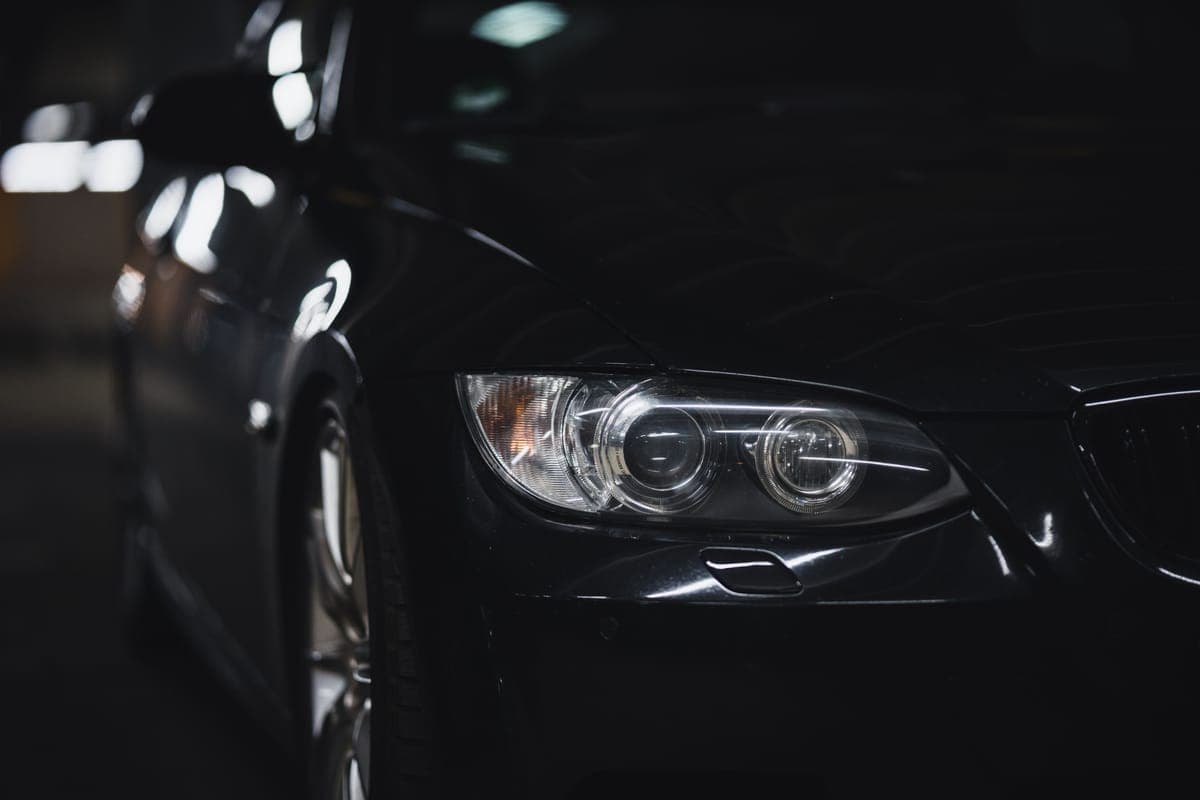
What is actually happening
Modern car paint is layered: primer, color coat, and a clear coat on top that provides gloss and UV protection. Almost every defect people want removed — swirl marks, wash marring, light scratches, water spot etching, oxidation — lives in that clear layer.
A defect is a valley. You cannot raise the bottom of a valley, so correction lowers everything around it with an abrasive until the surface is flat again and light reflects evenly. That is why correction is subtractive, why it is finite, and why every guide on this site tells you to remove the least that works.
What correction fixes, and what it does not
| Defect | Correctable? | Notes |
|---|---|---|
| Swirl marks and wash marring | Yes | The most common reason to correct, and the easiest |
| Light scratches | Yes, if a fingernail does not catch | The fingernail test decides it |
| Water spot etching | Usually | Mineral etching in the clear responds to compounding |
| Oxidation and dullness | Yes | Especially on single-stage paint |
| Holograms from a rotary | Yes | A fine polish removes them |
| Deep scratches through the clear | No | Nothing to level down to; that is a paint repair |
| Stone chips | No | Missing material, not a surface defect |
| Clear coat failure and peeling | No | Correcting accelerates it |
How to tell whether your car needs it
Wash and dry the car, then look at a horizontal panel in direct sunlight or under a single bright point source held at a low angle. Diffuse light hides everything; a point source reveals it. What you are looking for is a spiderweb pattern of fine circular scratches, most visible on the hood and roof.
If you see that pattern, the paint has wash marring and correction will remove it. If the panel looks clean under a point light, it does not need correcting, and polishing it would spend clear coat for no reason.
How much clear coat is there
Automotive clear coat is typically measured in tens of microns, and a correction stage removes a measurable fraction of it. That is a small number, and it is finite: a car corrected several times by previous owners has less to give than a one-owner car.
Professionals use a paint depth gauge for exactly this reason. Without one you are estimating, which is why the practical guidance is: start with the least aggressive combination that works, stop as soon as the defect is gone, and do not correct a car every year because you enjoy it.
What a correction actually requires
- A dual action polisher. Around $145-$300 — see the polisher roundup.
- Pads: a cutting pad, a polishing pad, and ideally a spare of each.
- A compound. A one-step product handles most daily-driver paint.
- An inspection light. On dark paint this is not optional.
- Masking tape for every trim edge, badge and panel gap.
- A panel wipe or isopropyl solution, so you see the real result rather than a filled one.
- Time. A one-step correction on a mid-size car is a full day the first time.
The whole sequence — from washing to the finished panel — is in how to polish a car, and the pad and compound combinations are in the pairing guide.
Every pick, with the working
Each entry lists the specifications the maker publishes, the axis scores those specifications produce, and what you give up. Rows that read “Not published” are not omissions on our side: they are figures the maker will not commit to in writing, and they cost the product points on the transparency axis.
Our pickThe upgrade most people should actually make
Griot's Garage G9 Random Orbital Polisher
Griot's Garage
$179.99 for a 9mm orbit driven by a 1,000-watt motor, shipped with a 6 inch vented backing plate and convertible to 5 inch. A 9mm throw finishes cleanly and asks less of your technique than a long throw; the 1,000 watts is what stops it stalling when you lean on a curve.
- Orbit throw
- 9mm
- Motor
- 1,000 watt
- Backing plate
- 6 inch vented, converts to 5 inch
- Cord
- Detachable
- Counterbalance
- Patent pending fan-cooled
- Speed range
- Not published
- Weight
- Not published
- Warranty
- Not published
What it does well
- 1,000-watt motor published, which is more power than most 9mm machines carry
- Ships with a 6 inch plate and converts to 5 inch, so pad choice is not locked in
- Detachable cord, published, which is the difference between storing it and wrestling it
- Fan-cooled counterbalance, which Griot's states extends tool and pad life
Who it is not for
- No speed range published on the product page, which is the second number you want
- No weight published
- No warranty term published on the page despite Griot's reputation for standing behind tools
How this score was calculated
- Protection claimdropped
- Nothing in this category is bought on how long it lasts, so the axis is dropped and the other weights are re-normalized.
- Published orbit throw2.5/10, weight 22%
- 9 mm, scored on a band running from 5 to 21. Published by Griot's Garage.
- Cost per ouncedropped
- This is not a consumable, so cost per ounce says nothing useful and the axis is dropped.
- Price against the ceiling5.5/10, weight 14%
- A listed $179.99 against the $400 one upgrade in this category realistically tops out at. A list price captured on the compile date, not a live price and not what you will pay.
- Written commitmentdropped
- Griot's Garage publishes no warranty term on this product's own page, so the axis is dropped. On a tool that is worth noticing, and it costs the product points on transparency instead.
- Spec transparency6.3/10, weight 18%
- 5 of the 8 specifications we went looking for are published by Griot's Garage. Every blank row below is something the maker will not put in writing, and it costs the product points here.
List price $179.99 per Griot's Garage's own store, captured on the compile date below. Not a live price and not what you will pay — the button is where the real number is.
Specifications from Griot's Garage G9 product page, compiled September 8, 2026.
2One-step correction on most paint
RUPES DA Fine Compound
RUPES
$14.99 for 8.5 oz, developed in-house by RUPES to combine cut with a finish that does not need a second step. On medium-hard clear coat with an intermediate pad this is the one-step answer, and one step is most people's whole job.
- Sizes
- 8.5 oz / 33.8 oz
- Position in range
- Fine; cut with a finishing result
- Tool compatibility
- Large-stroke random orbital and gear-driven DA
- Cut rating
- Not published
- Coverage
- Not published
- Working time
- Not published
What it does well
- Explicitly formulated to cut and finish in one step, which is the realistic goal for an enthusiast
- Designed for dual action machines, both large-stroke and gear-driven
- $1.76 an ounce at 8.5 oz
Who it is not for
- No cut rating published
- No coverage figure published
- One-step results depend on your paint hardness, which nobody can publish for you
How this score was calculated
- Protection claimdropped
- Nothing in this category is bought on how long it lasts, so the axis is dropped and the other weights are re-normalized.
- Capabilitydropped
- No single published number decides capability in this category, so the axis is dropped rather than invented.
- Cost per ounce6.9/10, weight 16%
- $14.99 for 8.5 oz works out at $1.76 an ounce, scored against a band of $1.00 (good) to $3.50 (expensive) for a compound.
- Price against the ceiling7.5/10, weight 14%
- A listed $14.99 against the $60 one upgrade in this category realistically tops out at. A list price captured on the compile date, not a live price and not what you will pay.
- Written commitmentdropped
- RUPES publishes no warranty term on this product's own page, so the axis is dropped. On a tool that is worth noticing, and it costs the product points on transparency instead.
- Spec transparency5.0/10, weight 18%
- 3 of the 6 specifications we went looking for are published by RUPES. Every blank row below is something the maker will not put in writing, and it costs the product points here.
List price $14.99 per Adam's Polishes' own store, 8.5 oz, captured on the compile date below. Not a live price and not what you will pay — the button is where the real number is.
Specifications from RUPES DA Fine Compound listing at Adam's Polishes, compiled September 8, 2026.
3The one-pad answer for light to moderate defects
Chemical Guys Orange Hex-Logic Quantum Cutting Pad
Chemical Guys
$12.49 for 5 inch or $14.49 for 6 inch, described as a medium-cutting pad for swirls, light scratches, oxidation and water spots. If you are buying one pad to go with a one-step polish, this is the cut level that matches.
- Sizes
- 5 inch / 6 inch
- Cut level
- Medium cutting
- Stated defects
- Swirls, scratches, oxidation, water spots
- Thickness
- Not published
- Density
- Not published
- Stated pad life
- Not published
What it does well
- Defect list published explicitly rather than left as 'medium cut'
- 5 and 6 inch sizes at a $2 difference
- The Hex-Logic face is stocked everywhere, so replacements are never a special order
Who it is not for
- No density, pore count or thickness figure published
- No stated pad life
- Buying pads by brand color is a habit worth breaking; colors are not standard across makers
How this score was calculated
- Protection claimdropped
- Nothing in this category is bought on how long it lasts, so the axis is dropped and the other weights are re-normalized.
- Capabilitydropped
- No single published number decides capability in this category, so the axis is dropped rather than invented.
- Cost per ouncedropped
- This is not a consumable, so cost per ounce says nothing useful and the axis is dropped.
- Price against the ceiling7.5/10, weight 14%
- A listed $12.49 against the $50 one upgrade in this category realistically tops out at. A list price captured on the compile date, not a live price and not what you will pay.
- Written commitmentdropped
- Chemical Guys publishes no warranty term on this product's own page, so the axis is dropped. On a tool that is worth noticing, and it costs the product points on transparency instead.
- Spec transparency5.0/10, weight 18%
- 3 of the 6 specifications we went looking for are published by Chemical Guys. Every blank row below is something the maker will not put in writing, and it costs the product points here.
List price $12.49 per Chemical Guys' own store, 5 inch, captured on the compile date below. Not a live price and not what you will pay — the button is where the real number is.
Specifications from Chemical Guys' Orange Quantum pad page, compiled September 8, 2026.
Prices last verified October 23, 2026. They move constantly; the figure on Amazon when you click is the real one.
Questions people actually ask
+How do I know if my car needs paint correction?
+How many times can a car be corrected?
+Can paint correction remove stone chips?
+Is paint correction the same as polishing?
+Should I correct before applying a ceramic coating?
Where these figures came from
- Griot's Garage, G9 Random Orbital Polisher product page — retrieved 2026-09-08
- Adam's Polishes, RUPES DA Fine Compound listing — retrieved 2026-09-08
Every figure on this page is a published manufacturer or authorized-retailer claim, not a measurement we made. How we research explains exactly what we did and did not do.