Wash and Decontamination
How to Remove Bird Droppings From Car Paint
A dropping left on a hot panel does not wash off cleanly a week later, because by then the clear coat has moved around it. The removal is two minutes of patience; the repair is an afternoon with a polisher.
By Sawyer V. · Last verified 2026-10-07
We have not tested any of this. Everything below is compiled from published manufacturer specifications, and the arithmetic is printed so you can check it. This page carries affiliate links: if you buy through one we earn a commission at no extra cost to you, and it does not change the order of the picks. Full disclosure.
| # | Pick | Best for | Score | Price |
|---|---|---|---|---|
| 1 | Rislone Splatt Bug & Bird Dropping Remover Rislone | The only bottle in this category that publishes a dwell time | 7.7/10 | $15.83 - view on Amazon |
| 2 | Autoglym Bird Dropping Wipes Autoglym | The pack that lives in the glovebox | 5.5/10 | $9.99 - view on Amazon |
| 3 | Gtechniq W8 Bug Remover Gtechniq | Not stripping the coating you just paid for | 6.5/10 | $28.13 - view on Amazon |
| 4 | 3D AAT 502 Finishing Polish 3D Car Care | Buying finishing polish at body-shop volume | 4.1/10 | $15.99 - view on Amazon |
| 5 | CarPro Reload 2.0 CarPro | Topping a coating you already have | 3.7/10 | $39.99 - view on Amazon |
Prices last verified October 7, 2026. They move constantly; the figure on Amazon when you click is the real one.
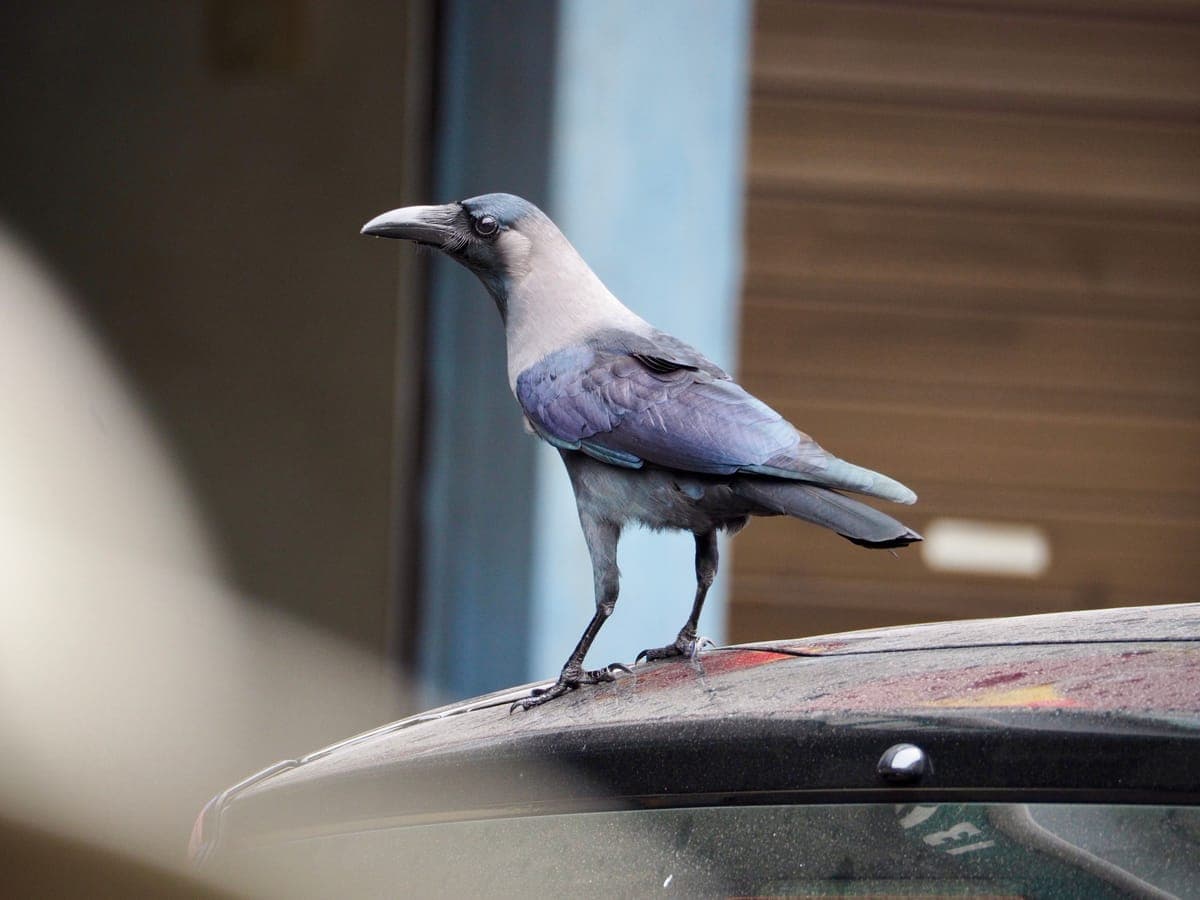
Does bird poop actually damage car paint?
Yes, and the maker who explains it best is Autoglym. Their Bird Dropping Wipes page states that droppings “can be extremely damaging to your paintwork if not attended to, often leaving a permanent blemish”, and gives the mechanism: the damage is caused as the lacquer expands and contracts around the dropping, leaving etching marks in the paint. Lacquer is the British word for clear coat.
That is worth sitting with, because it is not the explanation most people have been given. The popular version is that droppings are acidic and the acid burns through the clear coat. Acidity is real and it is part of why removers in this category are sold on neutralizing what is in the deposit. But the mechanism a maker is willing to print is thermal: the panel heats in the sun and cools at night, the clear coat moves, and the hardened deposit sitting on it does not, so the clear coat sets around the shape of the dropping. What you are left with is a dent at a scale you can only see in direct light, not a hole eaten through anything.
The practical consequence is the same either way: the longer it sits, and the hotter the panel gets, the worse the outcome. It also explains why a dropping on a cool shaded panel in October is usually nothing, and why the same dropping on a black hood in August is a polishing job.
The method the makers print
Autoglym put the whole technique on the box in two sentences: place the wipe on the dropping and allow the deposit to soften before removal, and do not rub dry droppings, as they may scratch the paintwork. Rislone’s directions for Splatt say the same thing in different words: spray onto a cool surface, let it stand for one minute, then spray a little onto a clean cloth and wipe gently until the surface is clean.
Both of those are a warning dressed as an instruction. A dried bird dropping contains grit and seed husks, and it has gone hard. Dragging it across clear coat is abrasive in the literal sense, and the fine scratches it leaves in a ring around the spot are often more visible than whatever the dropping itself did. That is the single most common way this job goes wrong, and it is entirely avoidable by waiting two minutes.
If you have no product with you at all, a bottle of water and a folded microfiber towel do the softening step. Soak the towel, lay it over the deposit, leave it, then lift. It is slower and it works. What does not work is the paper towel from the gas station.
What to use, and what each one is actually for
There is no need for a shelf of this stuff. There are three decisions: what you carry in the car, what you keep at home, and whether the mark has already gone past cleaning. Here is what the makers publish on each.
| Product | Size | Dwell time | Coating statement | Names bird droppings |
|---|---|---|---|---|
| Rislone Splatt | 32 oz, part 2222 | One minute, published | Stated safe for ceramic coatings and PPF; will not strip wax | Yes, in the product name |
| Autoglym Bird Dropping Wipes | 10 individually wrapped wipes | Not published; soften until ready | Not published | Yes, in the product name |
| Gtechniq W8 Bug Remover | 250ml, 500ml, 1 L, 5 L | Not published | Stated not to degrade coatings, sealants or waxes | No |
Rislone Splatt is the pick for the garage, and it is the pick because of the paperwork rather than any claim about strength. A published one-minute dwell time is the figure this entire category refuses to commit to, and it is the figure that tells you whether you are being patient enough. The fourteen named surfaces run from clear coat to Lexan to bug guards, and Rislone state plainly that it will not strip wax, leaves no greasy film and is safe for ceramic coatings and paint protection film. What they do not publish is the chemistry or the pH, and their own directions call for a cool surface, which is inconvenient given that a hot panel is exactly where droppings bake on.
Autoglym Bird Dropping Wipes solve a different problem, which is that you almost never find a dropping while standing next to your detailing shelf. Ten individually wrapped wipes, published as safe on all hard exterior surfaces, one of which lives in the glovebox and one in each door pocket. The trade is obvious and worth saying out loud: ten wipes and then you buy another pack, where a bottle does hundreds of droppings for less money. They also publish no chemistry, no pH and no coating statement.
What about a general bug and tar remover? Most of them will shift a dropping, and one of them, Mothers Speed Foaming Bug & Tar Remover, states it neutralizes acidic bug residue and bird droppings on contact. We have left it off this page for one reason: its single-bottle Amazon listing was showing as currently unavailable when we checked on 7 October 2026, and we do not point readers at something they cannot buy. The bug and tar roundup ranks that whole field on published surface lists and coating compatibility, and any of those bottles is a reasonable substitute for the two above.
Gtechniq W8 is the one we would skip here, and the reasoning is on its own page rather than ours. It is sold for bug splatter and Gtechniq never name droppings; the reason people buy it is the written promise that it will not degrade coatings, sealants or waxes, and Rislone now publish the same promise on a product that does name droppings and publishes a dwell time as well. If you already own W8, use it. It is not the bottle to buy for this.
Baking soda, hot water and the hair dryer
Three home remedies turn up constantly for this problem, and they deserve a straight answer rather than a shrug.
Baking soda. It is a mild abrasive and it will take a dropping off. No maker publishes a dilution or a procedure for using it on automotive clear coat, which means you are abrading your paint by feel. The products on this page cost ten to sixteen dollars and do not require you to guess.
Hot water. Warm water genuinely helps the softening step, and it is what we would reach for with nothing else to hand. Boiling water poured onto a cold panel is a different proposition, and nobody who makes paint or coatings publishes a temperature that is safe to pour on a car, so we are not going to suggest one.
The hair dryer trick. The enthusiast claim is that gentle heat lets a shallow etch relax back out of the clear coat, on the same thermal logic Autoglym use to explain how the etch formed. It circulates widely, it is cheap to try, and it is not published by any maker in this ledger as a repair method. Treat it as something that might work on a very fresh, very shallow mark, and treat polishing as the thing that actually removes one.
If it has already etched
Wet the panel and look at the mark. A deposit or a stain sitting on top of the clear coat mostly disappears under water. An etch stays visible, because the shape of the surface has changed and no chemical fills a shape. At that point you have stopped cleaning and started correcting.
A shallow etch comes out with a finishing polish and a machine. 3D AAT 502 is $24.99 for 8 oz, or $59.99 for 32 oz, and 3D state it is safe on all types of paint finish and designed with body shops in mind. It is a last-step product, so if the mark survives it the etch is deeper than a finishing polish will reach and you need cut first: the swirl mark guide covers the one-step approach and the machine, and the scratch remover page covers how to tell whether anything short of paint will fix it.
Two honest cautions. Polishing one small circle leaves a polished circle inside duller paint, which reads as a repair from across the street, so work the whole panel. And clear coat is finite: how many times you can polish a car is the arithmetic on that, and what paint correction costs is the comparison if you would rather hand it over.
Does a ceramic coating stop it?
It buys you time, and it does not make the car immune. A coating is a harder, slicker, more chemically resistant layer sitting on top of the clear coat, so a dropping has to get through that before it reaches anything that matters, and it releases more easily when you do go at it. What a coating cannot do is stop the panel heating and cooling, which is the mechanism Autoglym describe.
If you want the cheap version of that benefit, a spray sealant does most of it. CarPro Reload 2.0 is a 500ml SiO2 spray CarPro publish at up to three months standalone on a daily driver, originally formulated to maintain their coatings rather than replace them, and stated not to stain rubber or plastic trim. Three months is honest and unremarkable, and it is three months in which droppings sit on a sacrificial layer instead of on your paint. Whether a ceramic coating is worth it is the full version of this decision, and the coating spray roundup is the cheaper shelf.
Glass, windshields and trim
Glass is the one surface where you can be less careful, because it is much harder than clear coat, and it is also the surface where a dried dropping is most likely to get smeared across your line of sight by a wiper. Rislone name both: windshield and Lexan are two of their fourteen published surfaces, and Autoglym publish their wipes as safe on all hard exterior surfaces. Do not run the wipers over a dry dropping; that drags it across the screen and can score the blade as well.
Textured plastic trim and satin wraps need the same softening patience and a check of the surface list before you spray. Rislone publish vinyl, paint protection film and ceramic coatings in writing. If what you own publishes no surface list at all, do not be the person who finds out on a wrap.
Prevention, honestly
You cannot stop birds. What you can change is how long a dropping sits and what it lands on. Parking away from the obvious perches, wires and tree lines helps more than any product. A protected, slick surface helps second. And a wash habit that catches things early helps third: how often you should wash your car makes the case for dealing with droppings, sap and bug splatter immediately rather than waiting for wash day. For the apartment and no-hose version of that, a waterless wash handles a single dropping with no bucket at all.
Who should buy what
- One bottle at home, and you want to know how long to wait: Rislone Splatt, 32 oz, the only product here publishing a dwell time, a fourteen-surface list, a no-wax-stripping statement and coating and PPF safety.
- Something to keep in the car: Autoglym Bird Dropping Wipes, ten individually wrapped, published safe on all hard exterior surfaces, with the soften-first method printed on the box.
- A mark that stays visible when the paint is wet: 3D AAT 502 finishing polish, published safe on all paint finishes, on a machine, across the whole panel.
- Fewer of these jobs next year: CarPro Reload 2.0, published at up to three months standalone, so droppings land on a sacrificial layer.
- Skip Gtechniq W8 for this specific job. It is a bug remover, it never names droppings, and the coating-safe statement that makes it worth owning is now published by a product that does.
- Skip all of it if the deposit is gone and the paint is smooth. You are finished; just put protection back.
Every pick, with the working
Each entry lists the specifications the maker publishes, the axis scores those specifications produce, and what you give up. Rows that read “Not published” are not omissions on our side: they are figures the maker will not commit to in writing, and they cost the product points on the transparency axis.
Our pickThe only bottle in this category that publishes a dwell time
Rislone Splatt Bug & Bird Dropping Remover
Rislone
32 oz under part number 2222, and Rislone publish what nobody else in this category will: a one-minute dwell time, a fourteen-surface list, and written statements that it will not strip wax and will not scratch the finish. They also state it is safe for ceramic coatings and paint protection film. The chemistry and the pH are still not published.
- Size
- 32 oz (946 mL), part number 2222
- Dwell time
- One minute, published
- Stated surfaces
- Glass, plastic, fiberglass, chrome, paint, clear coat, front ends, bumpers, headlights, bug guards, mirrors, vinyl, windshield, Lexan
- Coating compatibility
- Stated safe for ceramic coatings and paint protection film
- Wax compatibility
- Stated it will not strip wax and leaves no greasy film
- Surface temperature
- Directions specify a cool surface
- Stated chemistry
- Not published
- pH
- Not published
What it does well
- One-minute dwell time published, which no other remover in this ledger states
- Fourteen surfaces named, including clear coat, Lexan, headlights and bug guards
- Stated it will not strip wax and leaves no greasy film
- Stated safe for ceramic coatings and paint protection film
- A product data sheet exists, which is rare below $20
Who it is not for
- Chemistry and pH not published
- Sold in one size only, so there is no small bottle to try
- Directions call for a cool surface, which rules out the hot panel you usually find a dropping on
How this score was calculated
- Protection claimdropped
- Nothing in this category is bought on how long it lasts, so the axis is dropped and the other weights are re-normalized.
- Capabilitydropped
- No single published number decides capability in this category, so the axis is dropped rather than invented.
- Cost per ounce10.0/10, weight 16%
- $15.83 for 32 oz works out at $0.49 an ounce, scored against a band of $0.50 (good) to $2.00 (expensive) for a bug and tar remover.
- Price against the ceiling5.5/10, weight 14%
- A listed $15.83 against the $35 one upgrade in this category realistically tops out at. A list price captured on the compile date, not a live price and not what you will pay.
- Written commitmentdropped
- Rislone publishes no warranty term on this product's own page, so the axis is dropped. On a tool that is worth noticing, and it costs the product points on transparency instead.
- Spec transparency7.5/10, weight 18%
- 6 of the 8 specifications we went looking for are published by Rislone. Every blank row below is something the maker will not put in writing, and it costs the product points here.
List price $15.83 per Amazon listing, 32 oz, captured on the compile date below. Not a live price and not what you will pay — the button is where the real number is.
Specifications from Rislone's Splatt product page, compiled September 8, 2026.
2The pack that lives in the glovebox
Autoglym Bird Dropping Wipes
Autoglym
Ten individually wrapped wipes, and the only product here you can use in a parking lot with no water, no bucket and no bottle. Autoglym publish the method on the box and it is the whole technique in two sentences: place the wipe on the dropping, let the deposit soften, and do not rub a dry dropping because it may scratch the paintwork.
- Pack size
- 10 individually wrapped wipes
- Stated surfaces
- All hard exterior surfaces
- Published method
- Place the wipe on the dropping and let the deposit soften before removal; do not rub dry droppings, as they may scratch the paintwork
- Stated chemistry
- Not published
- pH
- Not published
- Coating compatibility
- Not published
- Dwell time
- Not published
What it does well
- Ten individually wrapped wipes, so one lives in the glovebox and one in each door
- Published as safe on all hard exterior surfaces
- The soften-first method is printed by the maker rather than inferred
- No water, bucket or bottle needed, which is the situation most droppings are found in
- Autoglym publish the etching mechanism on the product page
Who it is not for
- Ten wipes and then you buy another pack; a bottle does hundreds of droppings
- No chemistry, pH or active ingredient published
- A wipe will not touch a dropping that has already etched the clear coat
- Single-use packaging for a job a microfiber towel and a spray also do
How this score was calculated
- Protection claimdropped
- Nothing in this category is bought on how long it lasts, so the axis is dropped and the other weights are re-normalized.
- Capabilitydropped
- No single published number decides capability in this category, so the axis is dropped rather than invented.
- Cost per ouncedropped
- Either the list price or the container size is unpublished, so the division cannot be done and the axis is dropped.
- Price against the ceiling7.1/10, weight 14%
- A listed $9.99 against the $35 one upgrade in this category realistically tops out at. A list price captured on the compile date, not a live price and not what you will pay.
- Written commitmentdropped
- Autoglym publishes no warranty term on this product's own page, so the axis is dropped. On a tool that is worth noticing, and it costs the product points on transparency instead.
- Spec transparency4.3/10, weight 18%
- 3 of the 7 specifications we went looking for are published by Autoglym. Every blank row below is something the maker will not put in writing, and it costs the product points here.
List price $9.99 per Amazon listing, pack of 10, captured on the compile date below. Not a live price and not what you will pay — the button is where the real number is.
Specifications from Autoglym's Bird Dropping Wipes product page, compiled September 8, 2026.
3Not stripping the coating you just paid for
Gtechniq W8 Bug Remover
Gtechniq
Skip this one. A good bottle on the wrong page. W8 is published for bug splatter and nowhere in Gtechniq's copy does it name bird droppings, and the one thing it is bought for, a written statement that it will not degrade coatings, sealants or waxes, is also published by Rislone Splatt, which does name droppings and publishes a dwell time as well.
$8.95 for 250ml, and the only bug remover here that states in writing it will not degrade coatings, sealants or waxes. It is also published as 100 percent biodegradable. On a coated car that compatibility statement is worth more than raw cutting power.
- Sizes
- 250ml, 500ml, 1 liter, 5 liters
- Coating compatibility
- Stated not to degrade coatings, sealants or waxes
- Biodegradability
- Stated 100 percent biodegradable
- Dwell time
- Not published
- pH
- Not published
What it does well
- Published as safe over existing coatings, sealants and waxes
- 100 percent biodegradable, stated plainly
- Four sizes from 250ml to 5 liters, so it scales with use
- $8.95 entry price is the lowest risk way into the category
Who it is not for
- 250ml is a small bottle and the per-liter price falls sharply with size
- No dwell time published
- Gtechniq's own site sits behind a bot challenge, so the figures here come from an authorized retailer
How this score was calculated
- Protection claimdropped
- Nothing in this category is bought on how long it lasts, so the axis is dropped and the other weights are re-normalized.
- Capabilitydropped
- No single published number decides capability in this category, so the axis is dropped rather than invented.
- Cost per ounce6.3/10, weight 16%
- $8.95 for 8.45 oz works out at $1.06 an ounce, scored against a band of $0.50 (good) to $2.00 (expensive) for a bug and tar remover.
- Price against the ceiling7.4/10, weight 14%
- A listed $8.95 against the $35 one upgrade in this category realistically tops out at. A list price captured on the compile date, not a live price and not what you will pay.
- Written commitmentdropped
- Gtechniq publishes no warranty term on this product's own page, so the axis is dropped. On a tool that is worth noticing, and it costs the product points on transparency instead.
- Spec transparency6.0/10, weight 18%
- 3 of the 5 specifications we went looking for are published by Gtechniq. Every blank row below is something the maker will not put in writing, and it costs the product points here.
List price $8.95 per The Rag Company, captured on the compile date below. Not a live price and not what you will pay — the button is where the real number is.
Specifications from The Rag Company's Gtechniq W8 Bug Remover listing, compiled September 8, 2026.
4Buying finishing polish at body-shop volume
3D AAT 502 Finishing Polish
3D Car Care
$24.99 for 8 oz, $59.99 for 32 oz or $149.99 for a gallon, and 3D state it is safe on all paint finishes and designed with body shops in mind. The gallon works out at $1.17 an ounce, which is the cheapest finishing polish per ounce on this site.
- Sizes
- 8 oz ($24.99), 32 oz ($59.99), 1 gallon ($149.99)
- Paint compatibility
- Stated safe on all types of paint finish
- Intended user
- Body shops, per the maker
- Abrasive size
- Not published
- Filler content
- Not published
- Silicone content
- Not published
What it does well
- Three sizes up to a gallon, so cost per ounce falls from $3.12 to $1.17
- Stated safe for all types of paint finish, which matters on fresh refinish work
- Body-shop formulation is stated rather than implied by the packaging
Who it is not for
- No abrasive size published
- No filler or silicone statement, which body shops normally require in writing
- The 8 oz bottle at $24.99 is poor value against the larger sizes
How this score was calculated
- Protection claimdropped
- Nothing in this category is bought on how long it lasts, so the axis is dropped and the other weights are re-normalized.
- Capabilitydropped
- No single published number decides capability in this category, so the axis is dropped rather than invented.
- Cost per ounce1.5/10, weight 16%
- $24.99 for 8 oz works out at $3.12 an ounce, scored against a band of $1.00 (good) to $3.50 (expensive) for a finishing polish.
- Price against the ceiling5.8/10, weight 14%
- A listed $24.99 against the $60 one upgrade in this category realistically tops out at. A list price captured on the compile date, not a live price and not what you will pay.
- Written commitmentdropped
- 3D Car Care publishes no warranty term on this product's own page, so the axis is dropped. On a tool that is worth noticing, and it costs the product points on transparency instead.
- Spec transparency5.0/10, weight 18%
- 3 of the 6 specifications we went looking for are published by 3D Car Care. Every blank row below is something the maker will not put in writing, and it costs the product points here.
List price $24.99 per 3D Car Care's own store, captured on the compile date below. Not a live price and not what you will pay — the button is where the real number is.
Specifications from 3D Car Care's AAT 502 Finishing Polish product page, compiled September 8, 2026.
5Topping a coating you already have
CarPro Reload 2.0
CarPro
A 500ml SiO2 spray sealant CarPro describes as offering up to three months standalone on a daily driver, and which was originally formulated to maintain CQUARTZ rather than replace it. Buy it as a coating topper, which is the job it was designed for; three months standalone is honest but unremarkable.
- Sizes
- 50ml / 100ml / 500ml / 1L / 1 gallon
- Claimed durability
- Up to 3 months standalone on a daily driver
- Application
- Wet or dry
- Stated trim safety
- Does not stain rubber or plastic trim
- SiO2 content
- Not published
- Published coverage
- Not published
- Dilution
- Not published
- Warranty
- Not published
What it does well
- Designed as a maintenance layer for CQUARTZ, which is exactly what a coating owner needs
- 500ml at $35.99 is a lot of applications for the money
- Can be applied wet or dry, which makes it a drying aid as well as a sealant
- Explicitly stated as safe on rubber and plastic trim without staining
Who it is not for
- Three months standalone is short if you are using it instead of a coating rather than over one
- No SiO2 percentage, coverage figure or dilution published
- Not a substitute for a real coating on an uncoated car
How this score was calculated
- Protection claim1.3/10, weight 20%
- CarPro claims 3 months, scored against the 24-month ceiling this category tops out at. That is the manufacturer's claim reported here, not a durability figure anyone measured for us.
- Capabilitydropped
- No single published number decides capability in this category, so the axis is dropped rather than invented.
- Cost per ounce6.7/10, weight 16%
- $35.99 for 16.91 oz works out at $2.13 an ounce, scored against a band of $1.20 (good) to $4.00 (expensive) for a spray coating.
- Price against the ceiling2.0/10, weight 14%
- A listed $35.99 against the $45 one upgrade in this category realistically tops out at. A list price captured on the compile date, not a live price and not what you will pay.
- Written commitmentdropped
- CarPro publishes no warranty term on this product's own page, so the axis is dropped. On a tool that is worth noticing, and it costs the product points on transparency instead.
- Spec transparency5.0/10, weight 18%
- 4 of the 8 specifications we went looking for are published by CarPro. Every blank row below is something the maker will not put in writing, and it costs the product points here.
List price $35.99 per CarPro's US store, 500ml, captured on the compile date below. Not a live price and not what you will pay — the button is where the real number is.
Specifications from CarPro Reload 2.0 500ml listing, compiled September 8, 2026.
Prices last verified October 7, 2026. They move constantly; the figure on Amazon when you click is the real one.
Questions people actually ask
+Does bird poop permanently damage car paint?
+How fast does bird poop damage car paint?
+How do I remove bird poop without damaging the paint?
+Can I use baking soda on bird droppings?
+Does a ceramic coating prevent bird dropping etching?
+What removes a bird dropping mark that is already etched?
+Is bird poop worse than tree sap?
Where these figures came from
- Autoglym, Bird Dropping Wipes product page — retrieved 2026-10-07
- Rislone, Splatt Bug & Bird Dropping Remover product page — retrieved 2026-10-07
- The Rag Company, Gtechniq W8 Bug Remover listing — retrieved 2026-10-07
- 3D Car Care, AAT 502 Finishing Polish product page — retrieved 2026-10-07
- CarPro, Reload 2.0 500ml listing — retrieved 2026-10-07
Every figure on this page is a published manufacturer or authorized-retailer claim, not a measurement we made. How we research explains exactly what we did and did not do.